

Table of Contents
- Understanding taxi assistance for disabled passengers
- Passenger Transport Subsidy Scheme WA: eligibility and how it works
- NDIS transport funding for taxis explained
- Booking wheelchair accessible taxis: step-by-step
- What to expect from wheelchair-accessible vehicles
- Safety standards and driver training for accessible transport
- Common challenges and how to address them
- Getting the most from your taxi assistance options
- Frequently Asked Questions
Last Updated: September 3, 2026
Understanding taxi assistance for disabled passengers
Taxi assistance for disabled passengers in Perth encompasses both government-funded schemes and private transport options designed to meet mobility needs. Whether you rely on a wheelchair, mobility aid, or require specialised vehicle features, understanding your options ensures you can access reliable transport when you need it.
Multiple pathways exist to secure affordable, accessible journeys, from the state-based Passenger Transport Subsidy Scheme to NDIS-funded options and private providers offering wheelchair-accessible vehicles. This guide pulls together eligibility, funding mechanisms, booking processes, and what to expect from accessible vehicles.
At Universal Cabs, we operate wheelchair-accessible vehicles across Perth and its surrounding suburbs.
Passenger Transport Subsidy Scheme WA: eligibility and how it works
The Passenger Transport Subsidy Scheme (PTSS) is a Western Australian government program that provides subsidised fares for eligible passengers using public and private transport services. You must have a permanent disability that substantially restricts your mobility and limits your capacity to use standard public transport without assistance (transport.wa.gov.au). Temporary injuries do not qualify.
The application process involves submitting medical evidence to the Department of Transport. Your GP or specialist provides documentation confirming the permanence of your condition. Processing times vary, but expect several weeks for assessment. Once approved, you receive a PTSS card valid for a set period.
The subsidy works through either a percentage discount on fares or a travel allowance system where funds are credited to a card for use on participating services. Importantly, not all private taxi operators participate in PTSS. Confirm your chosen provider accepts the scheme before relying on it for regular journeys. Government websites list participating operators, though this list changes periodically.
NDIS transport funding for taxis explained
The National Disability Insurance Scheme (NDIS) provides individualised funding that participants can direct toward transport support, including taxi services. During your planning meeting, if taxi services are deemed necessary to achieve your goals, attending work, accessing community participation, or receiving medical care, transport funding can be included in your plan.
Rather than a discount applied at point of use, NDIS typically provides a budget allocation. You can use approved providers and claim against your allocation, or in some cases manage the budget directly. This flexibility means you’re not restricted to a single provider or service type.
Coordination between NDIS funding and PTSS can be complex. Many participants have both. Your NDIS planner and support coordinator should clarify which funding applies to which journeys. NDIS funding is plan-specific and reviewed annually, so planning for potential changes ensures you’re not caught without cover midway through a financial year.
Private providers like Universal Cabs accept NDIS funding arrangements and work with participants to establish billing processes that align with their plan approvals.
Booking wheelchair accessible taxis: step-by-step
Start by identifying providers in your area that operate wheelchair-accessible vehicles. Universal Cabs operates wheelchair-accessible taxis across Perth and surrounding suburbs. When you contact a provider, confirm they have accessible vehicles available for your preferred time and location.
When booking, provide clear information about your mobility needs. Specify whether you use a manual or powered wheelchair, approximate dimensions, and whether you require assistance transferring. Mention any other mobility aids or medical equipment you’ll have with you.
Booking methods vary by provider. Universal Cabs accepts bookings via phone and online channels, with 24/7 availability across Perth. Because not all vehicles in a fleet are wheelchair-accessible, availability can be tighter than standard taxis. Booking in advance, even a few hours ahead, increases the likelihood of securing an accessible vehicle at your preferred time.
Confirm your booking details the day before for regular appointments. This ensures the driver knows your requirements and the vehicle is confirmed, and gives you an opportunity to flag any changes.
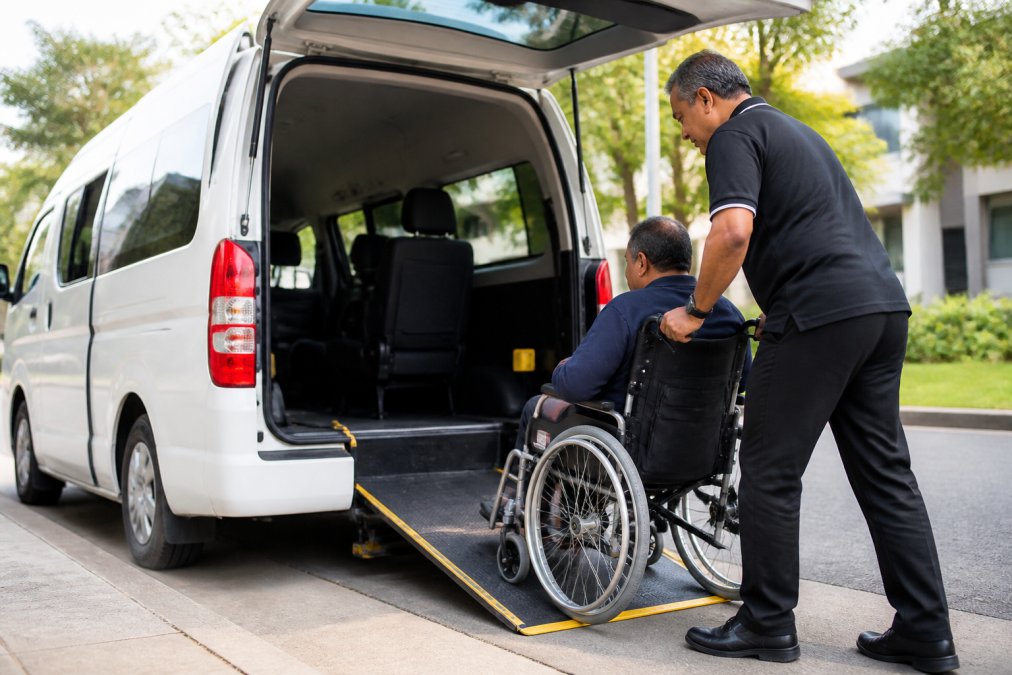
On the day, be ready a few minutes before your scheduled pickup. Have your mobility aids and belongings organised so boarding is efficient. If you require assistance, let the driver know what helps you most. Clear communication ensures a safe transfer.
What to expect from wheelchair-accessible vehicles
Wheelchair-accessible taxis are purpose-built or heavily modified to accommodate users with mobility aids. Most feature a hydraulic or mechanical ramp that deploys from the rear or side door, creating a gentle incline into the vehicle (peer-reviewed research). Once inside, your wheelchair secures into position using restraint systems, typically a combination of wheel clamps and lap belts designed to keep you stable during acceleration, braking, and turns.
The interior layout differs from standard taxis. Wheelchair spaces are positioned to optimise stability and safety. The vehicle is higher than a standard car, making entry and exit easier for some passengers. Headroom is generous to accommodate seated height. Some vehicles feature fold-down seats for companions or carers.
Safety features are built into accessible vehicles. The restraint systems meet Australian standards. Drivers receive training in securing wheelchairs and assisting passengers. If you have specific medical needs, mention this during booking so the driver can ensure appropriate positioning.
Climate control is important. Because you’re stationary in your wheelchair during the journey, you experience temperature differently than someone who can shift position. Let the driver know if you’re too warm or cold.
Pricing for accessible taxis varies by provider. Universal Cabs maintains transparent, consistent pricing without hidden spikes, regardless of vehicle type or time of day. Clarify pricing when booking to avoid surprises.
Safety standards and driver training for accessible transport
Wheelchair-accessible taxis operating in Western Australia must meet specific safety and operational standards. Vehicles are subject to regular safety inspections. The restraint systems securing wheelchairs must function reliably and meet Australian design standards. Ramps are tested for stability and load capacity.
Driver training is mandatory for operators of accessible vehicles (transport.wa.gov.au). Training covers wheelchair securement techniques, passenger communication, assistance methods, and emergency response. Drivers learn to recognise when a passenger needs help and how to provide it safely, and understand different disability types and the variations in support each requires.
Ongoing compliance is monitored through regular vehicle inspections and driver refresher training. Insurance requirements for accessible taxis are more stringent than standard vehicles, incentivising providers to maintain high safety standards.
Common challenges and how to address them
Availability gaps are the most common issue. Wheelchair-accessible vehicles are a smaller portion of most taxi fleets. During peak times, accessible vehicles may be unavailable. Planning ahead and booking in advance mitigates this. Regular users benefit from establishing relationships with providers.
Driver variability affects passenger experience. While training is mandatory, individual drivers differ in experience and comfort assisting passengers with disabilities. If you encounter a driver who doesn’t meet your needs, feedback to the provider helps improve driver development.
Fare disputes occasionally arise around surcharges or unexpected charges. Clarifying pricing before booking prevents most disputes. Universal Cabs maintains consistent pricing across all vehicle types and times of day, eliminating surprise charges.
Coordination between funding schemes creates confusion when you have both PTSS and NDIS. Your support coordinator should clarify which scheme applies to which journey. Written confirmation from your NDIS planner prevents billing mix-ups.
Cancellation policies can be frustrating if you need to change plans. Understanding the policy when booking allows you to make informed decisions. For regular appointments, confirming the day before rather than cancelling and rebooking saves fees.
Communication barriers occasionally occur if a driver misunderstands your needs. Providing written information or a card describing your requirements can help. Some passengers travel with support workers who communicate on their behalf.
Getting the most from your taxi assistance options
Combine your funding sources deliberately. Use PTSS for routine journeys where the subsidy covers the full cost. Reserve NDIS funding for journeys that exceed PTSS coverage or for times when PTSS isn’t available. This approach stretches your total transport budget further.
Build relationships with a primary provider. Regular passengers often receive priority booking and driver consistency.
Document your needs clearly through written notes, a support worker, or direct conversation. Clarity about your requirements prevents misunderstandings.
Plan journeys strategically. Combining multiple stops into a single trip reduces overall costs. Booking return journeys together often costs less than separate bookings.
Review your NDIS plan annually. Transport needs change as circumstances evolve. Bring evidence, receipts, and booking records showing your actual transport spending if you need to request adjustment.
Stay informed about scheme changes. Government subsidies and NDIS policy evolve. Subscribing to provider newsletters or checking government websites periodically ensures you’re aware of changes affecting your entitlements.
Provide feedback to providers. Your input directly shapes the experience for future passengers.
Navigating taxi assistance for disabled passengers requires understanding multiple schemes, knowing your eligibility, and finding providers equipped to serve your needs. Universal Cabs operates wheelchair-accessible vehicles across Perth with experienced drivers trained in passenger assistance, flexible booking options, and transparent pricing that doesn’t spike based on time of day or vehicle type. Book now to arrange your accessible transport, or contact us to discuss your specific mobility requirements and funding arrangements.
Frequently Asked Questions
How do I apply for the Passenger Transport Subsidy Scheme in Western Australia?
The Passenger Transport Subsidy Scheme (PTSS) helps eligible people with permanent disabilities access subsidised travel. To apply, contact the Department of Transport Western Australia directly for application forms and eligibility assessment. They will evaluate your mobility needs and permanent disability status. Once approved, you receive a travel allowance or vouchers to use with participating transport providers. Processing times vary, so apply well in advance of when you need the subsidy. Check the official Department of Transport website for current application procedures and required documentation.
Are NDIS participants eligible for taxi transport funding?
NDIS funded transport depends on your individual plan and support needs. Some NDIS participants have transport as a funded support category, which can cover taxi fares for essential trips like medical appointments or community access. Others may have funding allocated to transport assistance through support coordination. Review your NDIS plan or contact your planner to confirm whether taxi transport is included in your funding. If it is, ask your provider which taxi services accept NDIS funding in your area.
What features should I look for in a wheelchair-accessible taxi?
A properly equipped wheelchair-accessible taxi should have a lowered or ramped entry, secure wheelchair restraint systems, and sufficient internal space for your mobility aid. The vehicle should have handrails for stability and be regularly maintained to ensure safety. Drivers should be trained in assisting passengers with disabilities and using the accessibility features correctly. When booking, confirm the vehicle has the specific modifications you need, some taxis accommodate folding wheelchairs, whilst others suit larger power wheelchairs. Ask about the driver’s experience with your particular mobility needs.
How quickly can I book a wheelchair-accessible taxi for regular appointments?
Booking times vary depending on demand and your location. For regular medical appointments or recurring trips, advance booking gives you the best chance of securing a wheelchair-accessible vehicle. Many taxi services allow bookings days or weeks ahead. For urgent same-day trips, call as early as possible, morning bookings typically have shorter wait times than evening requests. Providers with larger accessible fleets generally respond faster. Ask your preferred taxi service about their typical booking window and whether they offer priority scheduling for regular passengers with disability transport needs.
This article was written using GrandRanker