

Table of Contents
- Getting around Perth with accessible transport
- Public transport accessibility: buses, trains and ferries
- Booking a wheelchair accessible taxi for your journey
- Accessible airport transfers and arrival planning
- Planning an accessible tourist itinerary
- Mobility aids, equipment and accessibility support
- Conclusion
Last Updated: August 21, 2026
Getting around Perth with accessible transport
Accessible transport for tourists isn’t a luxury, it’s the foundation of a good trip. When you arrive in a new city with mobility aids, every transfer, every journey between attractions, and every airport run matters. The difference between a smooth itinerary and a frustrating one often comes down to one thing: knowing which transport options actually work for you before you arrive.
This guide from Universal Cabs breaks down how to navigate Perth’s public transport network, book accessible taxis, and plan an itinerary that doesn’t compromise on what you want to see. We’ll cover buses with kneeling technology, accessible train stations, ferry services, and how to arrange reliable airport transfers. The goal is simple: give you the information you need to move around the city independently and confidently.
[Book your accessible transport](/book-wheelchair-accessible-taxi-perth/) before you arrive. Wheelchair accessible taxi availability can vary, and confirming in advance eliminates stress on arrival day. Universal Cabs allows advance bookings via phone or online, so you can secure your airport transfer before your flight lands.
Public transport accessibility: buses, trains and ferries
Perth’s public transport network has made significant strides toward inclusive travel. Understanding what each mode offers, and where the gaps are, helps you plan realistic routes and avoid unexpected barriers.
Low-floor buses and kneeling technology
Low-floor buses form the backbone of accessible public transport in Perth. These vehicles feature a hydraulic kneeling system that lowers the bus towards the kerb, creating a step-free or near-step-free boarding point. The technology is straightforward: when a passenger with a mobility aid signals they need access, the driver activates the kneeling function, which drops the vehicle’s suspension by up to 150mm, bringing the entrance platform closer to ground level (apta.com).
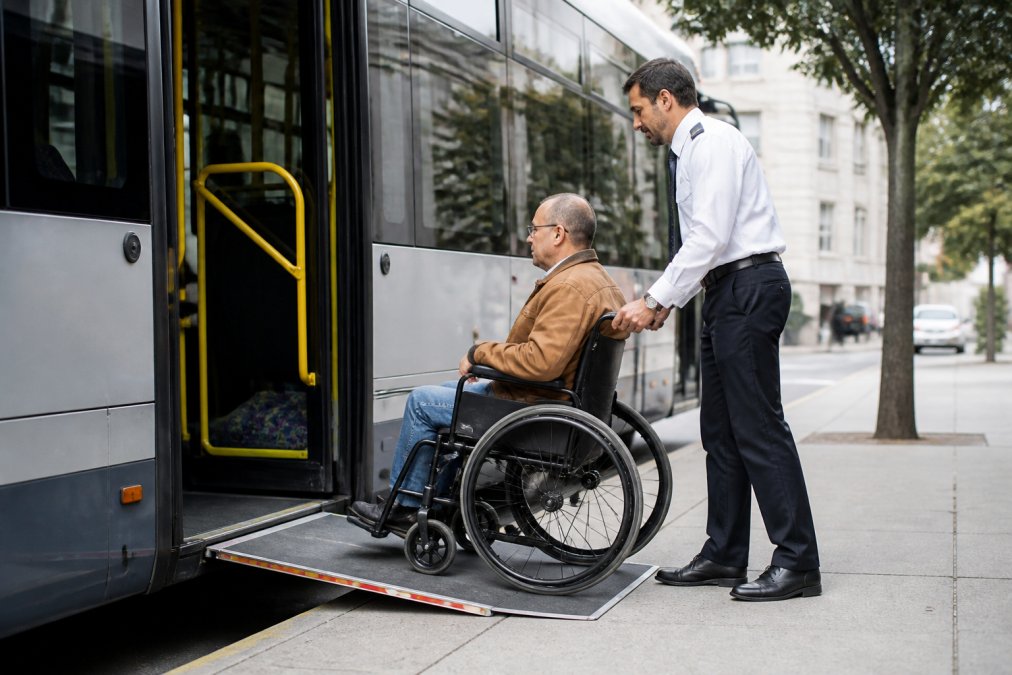
Transperth operates a mixed fleet across Perth’s bus network. Many routes use low-floor buses, but not all services run these vehicles during every time slot. Peak-hour services tend to have better accessibility equipment availability, while off-peak and late-night routes may use older stock. Audio-visual announcements on most modern buses call out stops, helping passengers with vision impairments navigate their journey.
Priority seating areas are marked on accessible buses, and drivers are trained to provide boarding assistance if needed. Tactile paving at major bus stops helps orient passengers with vision impairments, and sheltered waiting areas protect you from Perth’s variable weather while you wait.
Common mistakes include assuming every bus on a route has kneeling capability, it doesn’t, or boarding without confirming the driver can deploy the ramp. Always make eye contact with the driver and wait for them to activate the system. Mobility scooter compatibility varies; compact scooters fit most low-floor buses, but full-size models may not.
Not all Transperth buses are low-floor equipped. Check the Transperth website or call ahead before relying on a specific route for accessibility. Evening and weekend services are more likely to use older, non-accessible stock.
Train network accessibility and station facilities
Perth’s train network includes the Armadale, Fremantle, Joondalup, and Midland lines, with step-free access at most modern stations. However, accessibility varies significantly between older and newer stations.
Newer stations like Thornlie and Yanchep feature full platform-level boarding, with trains stopping at the correct height relative to the platform (transperth.wa.gov.au). Older stations may have gaps between platform and train door, requiring portable ramps or assistance from station staff. Many stations have lifts serving platforms, but maintenance issues can occasionally render them unavailable, this is worth checking before planning a journey.
Station facilities typically include accessible toilets, seating areas, and wayfinding signage. Real-time accessibility information isn’t always available online, so calling Transperth’s customer service before your trip confirms whether lifts are operational and which stations have step-free boarding.
Ferry services and maritime accessibility
Perth’s ferry services run between the city centre and Fremantle, and between South Perth and the city. Ferry terminals have variable accessibility. The Elizabeth Quay terminal (city centre) and Fremantle terminal both offer accessible boarding, with ramps and assistance available for passengers with mobility aids.
Ferries themselves are equipped with accessible toilets and seating areas, though the experience can be uncomfortable if you use a mobility scooter during rough water conditions. Booking ahead with the ferry operator allows you to confirm accessibility features and arrange any assistance you might need.
Booking a wheelchair accessible taxi for your journey
Wheelchair accessible taxis are the most reliable option for consistent, barrier-free transport in Perth. Unlike public transport, which operates on fixed schedules and may have variable accessibility, accessible taxis provide door-to-door service with trained drivers who understand mobility aid requirements.
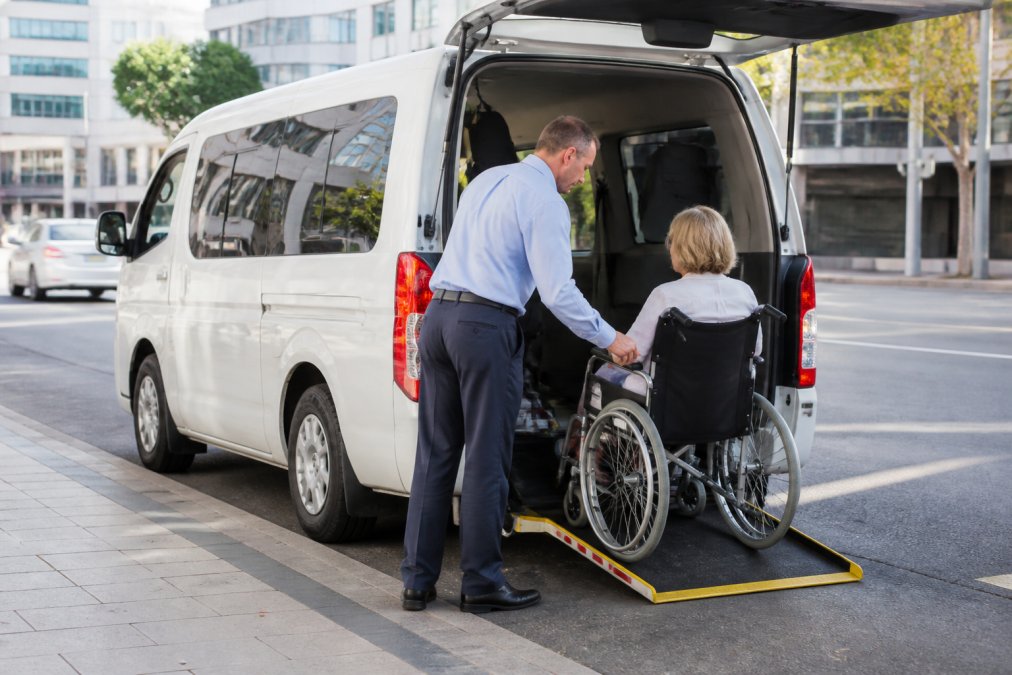
Universal Cabs operates a fleet of wheelchair accessible vehicles across Perth and surrounding suburbs. These vehicles feature:
- Hydraulic ramps or lifts for step-free entry
- Spacious interiors that accommodate wheelchairs, mobility scooters, and walkers
- Secure restraint systems designed for safety and comfort
- Drivers trained in mobility aid handling and passenger assistance
- 24/7 availability for airport, local, and long-distance journeys
Booking is straightforward: phone or book online in advance, or call for same-day pickup if needed. Specify that you require an accessible vehicle when booking, this ensures the right vehicle is allocated and the driver arrives prepared. Universal Cabs guarantees transparent, consistent pricing with no surge charges during peak hours or public holidays, so you know the fare upfront.
When the driver arrives, confirm they have the correct vehicle type and ask them to deploy the ramp or lift. Most drivers are experienced with this process, but communication is key. If you use a mobility scooter, let the driver know its weight and dimensions so they can confirm the vehicle’s capacity.
Accessible taxis eliminate the unpredictability of public transport. You get door-to-door service, no transfers between modes, and drivers trained in accessibility. For tourists with mobility aids, this is often the most practical option for [airport transfers](/reliable-taxi-for-perth-airport-transfers-2026-guide/) and longer journeys.
Accessible airport transfers and arrival planning
Arriving at Perth Airport with mobility aids requires planning. The airport itself has good accessibility infrastructure, lifts, accessible toilets, and clear wayfinding, but getting from the terminal to your accommodation is where transport choice matters most.
Universal Cabs offers flight-tracking technology for airport pickups. Book your transfer in advance, and the system monitors your flight status. If your flight is delayed, the driver’s ETA adjusts automatically, so you’re not left waiting at the terminal or, worse, having the driver arrive when you’re still in the air. This feature eliminates one of the biggest stressors for travellers with mobility aids: coordinating timing on an unfamiliar journey.
The airport is located approximately 15km east of Perth’s city centre. Depending on traffic, the journey takes 20-35 minutes by car. Universal Cabs drivers know the most efficient routes and can navigate Perth’s road network without the confusion of public transport transfers.
When booking, specify:
- Your flight number and arrival time
- The exact terminal or exit point where you’ll be waiting
- Your mobility aid type (wheelchair, scooter, walker, etc.)
- Any luggage or equipment assistance you might need
- Your destination address and any access instructions for your accommodation
Arrive at your pickup point 10-15 minutes after landing to allow the driver time to reach the terminal. Most accessible taxis can accommodate one mobility aid and one standard suitcase comfortably; if you’re travelling with additional luggage or equipment, mention this during booking so the driver can plan accordingly.
Planning an accessible tourist itinerary
A good itinerary for accessible transport for tourists balances what you want to see with realistic travel times and transport options between attractions.
Start by mapping attractions within a single transport corridor, for example, the Fremantle line or a cluster of city-centre venues. This reduces the number of transfers you need to make and keeps journey times manageable. Perth’s main attractions, the Perth Cultural Centre, Kings Park, South Perth foreshore, and Fremantle, are all accessible via public transport or taxi, but not all routes between them are equally easy.
Intermodal journey planning and transport integration
Intermodal journey planning means combining different transport modes, bus, train, taxi, to reach your destination. This works well in Perth if you plan carefully.
A practical example: arriving at Perth Airport, take a Universal Cabs accessible taxi to your hotel (eliminates the stress of navigating airport transfers with luggage). From your hotel, use Transperth buses or trains for daytime attractions within the city. For evening outings or if you’re tired, book another accessible taxi rather than struggling with late-night public transport.
The key is matching transport mode to your energy levels and mobility on any given day. Public transport is cost-effective for straightforward daytime journeys; accessible taxis are worth the cost for airport transfers, late-night returns, or days when you’re fatigued.
Check Transperth’s journey planner online before you travel. Enter your starting point and destination, and it shows public transport options with accessibility information. This helps you decide whether to use public transport or book an accessible taxi based on the number of transfers required and the accessibility of each station or stop.
Plan your itinerary around Transperth’s accessible bus and train routes, not the other way around. If a key attraction requires multiple transfers or uses inaccessible stations, book a taxi instead. Flexibility saves frustration.
Real-time accessibility status and service updates
Real-time accessibility data in Perth is limited compared to larger cities, but you can access current information through several channels:
- Transperth website: Check service alerts, lift outages, and station accessibility information
- Transperth customer service: Call ahead to confirm specific station or bus route accessibility on your travel day
- Universal Cabs: When booking, ask about any known accessibility issues or service changes that might affect your journey
- Your accommodation: Hotel staff often have up-to-date knowledge of local transport conditions and can advise on the best accessible routes to nearby attractions
Service disruptions, lift breakdowns, temporary route changes, are more common during maintenance windows. If you’re visiting during a known maintenance period, adjust your itinerary or rely more heavily on accessible taxis to avoid disappointment.
Mobility aids, equipment and accessibility support
Understanding how Perth’s transport network handles different mobility aids helps you pack and plan appropriately.
Wheelchairs are fully accommodated on low-floor buses, trains, and accessible taxis. Compact folding wheelchairs take up less space and are easier to manage if you need to transfer between modes. Full-size rigid wheelchairs are supported but require more space in vehicles.
Mobility scooters are accepted on some services but not all. Most low-floor buses can accommodate compact scooters (under 1.2m long and 600kg), but full-size scooters may not fit (transperth.wa.gov.au). Trains vary by station; modern stations with wide lifts accept most scooters, while older stations may be problematic. Accessible taxis are the safest option for scooter users because drivers can confirm capacity before you board.
Walkers, canes, and other aids are universally accommodated. Priority seating is available on all public transport, and drivers or station staff can assist with stability if needed.
Equipment rental is available through several providers in Perth. If you need a wheelchair or scooter for your stay but don’t want to travel with your own, rental companies can deliver to your hotel. This option works well if you’re visiting for a short period and want to trial different equipment types before committing to purchase.
Accessible accommodation is widespread in Perth, but confirm accessibility features when booking. Ask specifically about:
- Step-free entry and accessible parking
- Accessible bathroom facilities
- Accessible kitchen or kitchenette (if relevant)
- Accessible routes to nearby attractions and transport stops
Planning accessible transport for tourists in Perth is entirely manageable with the right information and advance preparation. The city’s public transport network has solid accessibility infrastructure, and services like Universal Cabs fill gaps where public transport isn’t practical. Book your airport transfer before you arrive, map your itinerary around accessible routes, and don’t hesitate to use accessible taxis on days when you need extra comfort or flexibility. Perth’s attractions are within reach, the key is choosing transport that matches your mobility needs and travel style. Book now with Universal Cabs to arrange your accessible transfer and start your trip with confidence.
Frequently Asked Questions
What's the best way to book a wheelchair accessible taxi for airport transfers?
When booking a wheelchair accessible taxi for airport transfers, contact the service directly and confirm your mobility aid type and any specific accessibility requirements in advance. Provide your flight details so the driver can track your arrival and adjust timing accordingly. Universal Cabs maintains a dedicated fleet of wheelchair-accessible vehicles and uses flight-tracking technology to ensure punctual pickups, eliminating the stress of coordinating timing with airport delays or baggage collection.
Are Transperth buses and trains fully accessible for tourists with mobility aids?
Most Transperth services feature step-free access and accessibility support. Low-floor buses with kneeling technology allow level boarding, and priority seating is reserved for passengers with mobility aids. Train stations include accessible platforms and lifts at most locations, whilst ferries offer barrier-free boarding ramps. However, accessibility varies by route and station, so check real-time accessibility status before travelling or contact Transperth directly for specific route information.
How much does accessible transport cost for tourists visiting?
Transperth offers concession travel options and visitor cards that provide good value for multi-day trips. Taxi pricing depends on distance and time of day, but reliable services offer transparent, consistent fares without surge pricing during peak hours or public holidays. For exact costs, contact your chosen transport provider directly or check their website for current pricing and available concession schemes.
Can I use a mobility scooter on public transport, and do I need to book in advance?
Mobility scooters are generally permitted on Transperth buses and trains, though size restrictions apply. Low-floor buses accommodate most scooters in designated wheelchair spaces, and trains have accessible compartments. Some services may require advance notice for larger equipment. Contact Transperth or your taxi service ahead of time to confirm compatibility and arrange any necessary boarding assistance or equipment logistics.
This article was written using GrandRanker