

Table of Contents
- Understanding Dynamic Pricing and Fare Multipliers
- Book at the Best Time to Avoid Surge Pricing
- Strategic Pick-up Location Choices
- Pre-booking vs. On-demand: Which Avoids Peak Demand Pricing
- Rideshare Price Comparison Tools and Fare Estimation
- Alternatives to Uber and Ola for Cost-Effective Travel
- How to Avoid Surge Pricing During Special Events and Rush Hour
- Conclusion
Last Updated: August 12, 2026
Understanding Dynamic Pricing and Fare Multipliers
Dynamic pricing is the practice of adjusting taxi fares based on real-time demand, available driver supply, and market conditions. When demand for rides exceeds available drivers, fare multipliers kick in, meaning you pay significantly more for the same journey. This algorithmic pricing model has become standard across rideshare platforms, but traditional taxi services operate differently.
The mechanics are straightforward: during peak demand periods (rush hour, special events, bad weather), the system increases prices to encourage more drivers onto the road and balance supply with passenger demand. A journey that costs $25 during quiet hours might cost $45 during peak evening demand. Understanding how this works is the first step toward avoiding it.
Universal Cabs operates on transparent, consistent pricing without hidden price spikes. This means your fare doesn’t multiply based on demand, you pay the same rate whether you book at 8 AM or 6 PM, on a Tuesday or during a major event. This consistency gives commuters and travellers predictability that rideshare platforms cannot offer.
The key difference lies in how services structure their business model. Rideshare platforms rely on surge pricing to manage driver availability and maximise revenue during high-demand windows. Traditional taxi services like Universal Cabs maintain fixed pricing structures that remain stable regardless of external demand pressures. For frequent travellers, this distinction matters enormously.
Book at the Best Time to Avoid Surge Pricing
The single most effective way to avoid surge pricing is to book during off-peak hours. Demand for taxis peaks during specific, predictable windows: early morning (7-9 AM), late afternoon (4-6 PM), and evening (10 PM onwards). If your schedule allows flexibility, shifting your travel outside these windows can cut costs substantially.
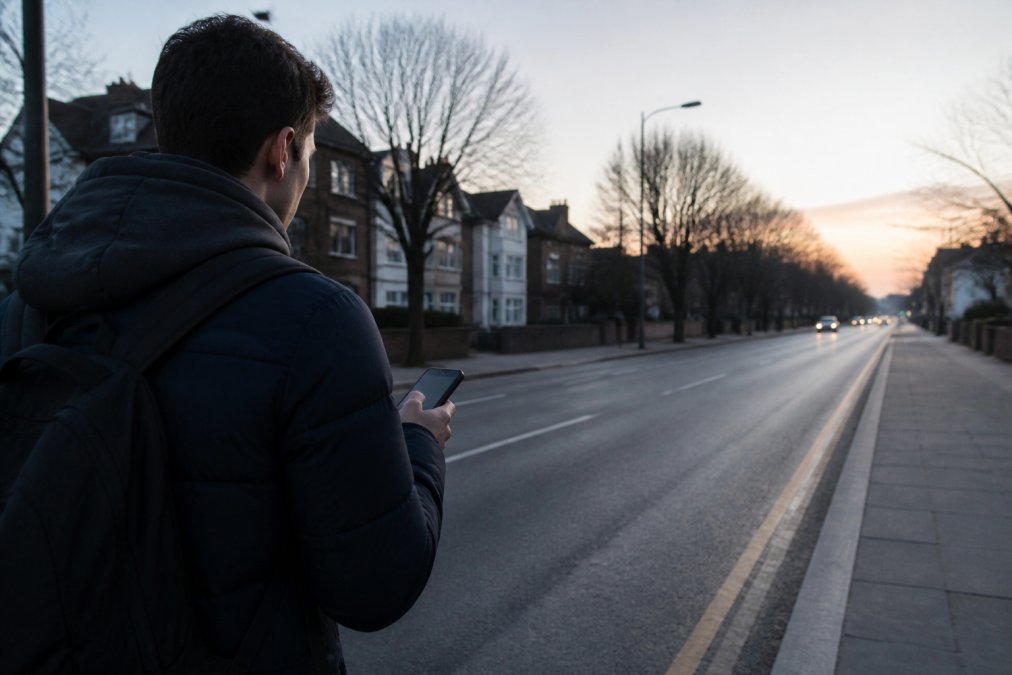
Mid-morning (10 AM-12 PM) and early afternoon (1-3 PM) typically see the lowest demand and therefore the lowest fares. If you’re planning a non-urgent trip, booking during these windows eliminates surge pricing entirely. Many professionals and families adjust flexible appointments around these quieter periods specifically to reduce transport costs.
The psychology of booking also matters. When you book in advance rather than requesting a ride on-demand, you signal lower urgency to the system. Pre-booking during off-peak hours gives you the best possible rate and guarantees vehicle availability. Waiting until you need a ride immediately often coincides with peak-demand periods, which naturally triggers higher fares.
Weather conditions amplify demand spikes. Rain, storms, or extreme heat drive sudden surges in ride requests as people abandon public transport alternatives. Checking the forecast and booking proactively before weather deteriorates helps you avoid the inevitable pricing spike that follows. If bad weather is coming, book your ride earlier in the day while conditions are still stable.
Public holidays and special events create predictable demand surges. If you know an event is happening, a major sports match, concert, or festival, book your transport well before event start times. The hours immediately surrounding event traffic are the worst for pricing. Universal Cabs allows advance booking, which locks in consistent pricing regardless of when the actual event occurs.
Strategic Pick-up Location Choices
Where you request your ride matters more than most people realise. Taxis surge in price most dramatically in high-traffic zones during peak periods. If you can walk 200-300 metres to a quieter pick-up location, you may avoid surge pricing entirely.
This tactic works because surge pricing concentrates in areas of extreme demand. Airport terminals, major train stations, and busy shopping districts experience the most aggressive multipliers during peak hours. Moving your pick-up point to a nearby street with less congestion can mean the difference between a standard fare and a surged one.
Geographic variance in pricing is significant. Suburban pick-up locations typically see lower demand and therefore lower fares than central business districts. If you’re travelling from the CBD, consider whether walking to a quieter suburban area is practical. The savings often exceed the walking time investment, especially during peak periods.
Timing your pick-up location strategy requires understanding local geography. Identify quieter streets parallel to major thoroughfares. Peak-demand zones are typically the most obvious, most convenient pick-up points, the main street, the taxi rank outside the airport terminal, the station forecourt. Moving one block away often reduces demand pressure dramatically.
For regular commuters, mapping out alternative pick-up points near your home or office takes time upfront but pays dividends. You’ll know exactly where to walk to access cheaper fares without needing to think about it during rush hour. This becomes a routine part of your commute strategy.
Pre-booking vs. On-demand: Which Avoids Peak Demand Pricing
Pre-booking a taxi in advance is the most reliable way to avoid surge pricing entirely. When you book hours or days ahead, you lock in pricing that reflects current market conditions, not future demand spikes. This is fundamentally different from requesting a ride on-demand, where pricing adjusts in real-time to current supply-demand imbalances.
On-demand booking exposes you to whatever fare multiplier exists at that exact moment. If you request a ride at 5:30 PM on a Friday, you’re requesting during peak rush hour when every commuter is trying to get home. The system immediately applies surge pricing because demand vastly exceeds available drivers. There’s no buffer, no negotiation, you either accept the surged fare or wait.
Pre-booking creates a buffer between your travel need and actual demand conditions. If you book tomorrow’s morning airport transfer today, the system calculates pricing based on typical morning demand, not tomorrow’s unknown conditions. Even if unexpected demand spikes occur tomorrow, your pre-booked fare remains locked at the rate you agreed to today.
For predictable journeys, daily commutes, scheduled airport runs, regular medical appointments, pre-booking is non-negotiable if you want to avoid surge pricing. Universal Cabs’ booking system allows you to reserve rides in advance, guaranteeing both vehicle availability and consistent pricing. This is particularly valuable for early morning airport transfers, where demand is concentrated and surge pricing is common.
The trade-off with on-demand booking is flexibility. You maintain the option to request a ride whenever you need it, but you surrender pricing certainty. For time-critical journeys or unpredictable schedules, on-demand is necessary, but you should expect to pay more during peak periods.
Hybrid strategies work well for mixed schedules. Pre-book your predictable journeys (commute, regular appointments, routine airport runs) and use on-demand only for genuinely unexpected needs. This minimises your exposure to surge pricing while maintaining flexibility where you actually need it.
Rideshare Price Comparison Tools and Fare Estimation
Understanding fare estimation before you book is crucial. Most rideshare platforms now display upfront pricing, showing you the exact fare before you confirm the ride. Using this transparency strategically, by checking fares at different times or from different pick-up locations, helps you identify the cheapest options.
Fare estimation tools vary in accuracy. Some platforms calculate based on distance and time; others factor in real-time demand, weather, and special events. Checking multiple platforms simultaneously reveals pricing differences that might surprise you. A journey that costs $35 on one platform might be $28 on another during the same time window.
Universal Cabs provides transparent fare information upfront, allowing you to compare directly against rideshare alternatives. When you know the exact price before booking, you can make informed decisions about whether to book now or wait for a quieter period. This transparency removes the guesswork that rideshare surge pricing relies on.
Loyalty programs and corporate accounts often unlock better pricing than standard on-demand rates. If you travel frequently with the same service, enquire about loyalty benefits or corporate arrangements. These programs typically offer fixed rates or discounted multipliers that reduce surge pricing exposure.
Some services offer fare-locking features that guarantee a specific price if you book within a certain window. Understanding these options, and which services offer them, helps you strategically time your bookings. A service that locks fares for 30 minutes gives you time to find the best option without watching prices climb in real-time.
Mobile apps make fare comparison easier. Download multiple booking apps and check fares simultaneously before committing. The few seconds spent comparing might reveal a $10-15 saving. For regular travellers, this becomes a routine habit that compounds into significant annual savings.
Alternatives to Uber and Ola for Cost-Effective Travel
Rideshare platforms aren’t your only option for on-demand transport. Traditional taxi services, pre-booked car services, and public transport alternatives often cost less, especially during peak demand periods when rideshare surge pricing is most aggressive.
Traditional taxis operate on fixed-fare or metered systems that don’t multiply during peak demand. A taxi ride from the airport to the CBD costs the same at 6 AM as it does at 6 PM. This pricing consistency makes traditional taxis predictable and often cheaper than rideshare during evening rush hour or special events.
Public transport integration deserves serious consideration. Buses and trains don’t surge in price during peak hours, they’re the same cost regardless of demand. For journeys where public transport is viable, combining a short taxi ride with public transport often costs less than a direct rideshare journey. For example, taking a taxi to the nearest train station and then using rail for the main journey frequently costs 30-40% less than a direct rideshare.
Carpooling and ride-sharing within your network (friends, colleagues, family) eliminates surge pricing entirely. If four people split a taxi fare, each person pays one-quarter of the total. Even during peak demand, shared transport costs less per person than individual rideshare rides. Coordinating with colleagues heading to the same workplace or event creates natural carpooling opportunities.
Walking or cycling for short journeys (under 2 km) removes transport costs entirely. Many people reflexively book a taxi for distances they could reasonably walk. During peak pricing periods, walking becomes not just cost-effective but faster than waiting for a taxi in heavy traffic.
For airport transfers, pre-booked car services often compete directly with rideshare pricing without surge multipliers. Many hotels and corporate travel providers offer fixed-rate airport transfer packages. These locked-in rates remove uncertainty and typically undercut rideshare pricing during peak periods.
How to Avoid Surge Pricing During Special Events and Rush Hour
Special events and rush hour create predictable, concentrated demand spikes that trigger aggressive surge pricing. Understanding when these spikes occur allows you to plan around them strategically.
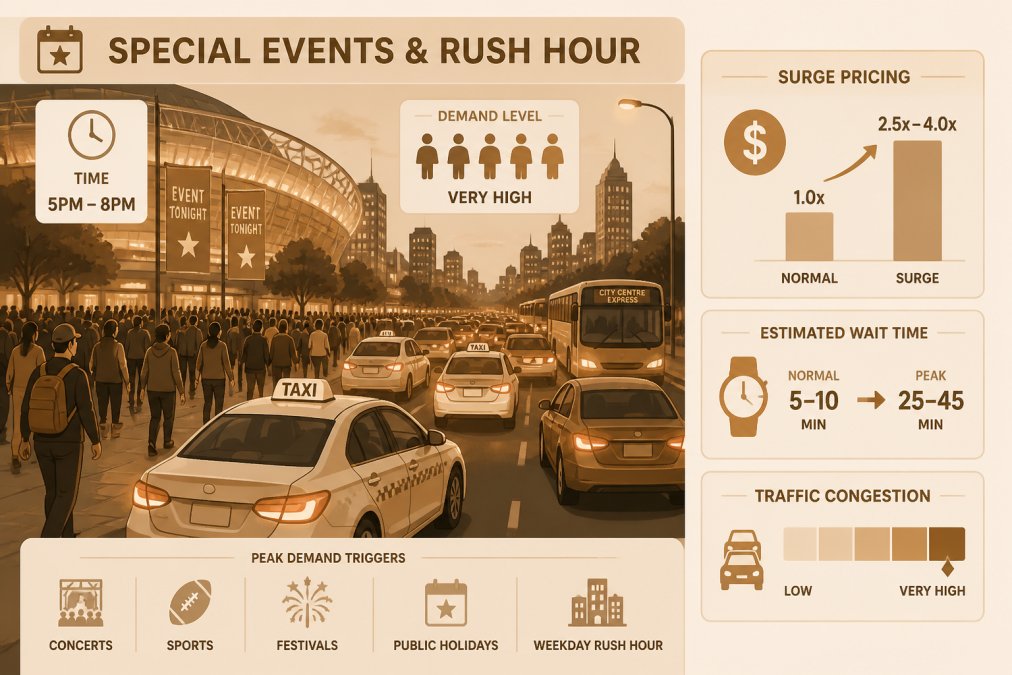
Rush hour typically peaks 7-9 AM (morning commute) and 4-6 PM (evening commute). These windows are predictable, recurring, and create the most consistent surge pricing. If your schedule allows, shifting your travel outside these windows, arriving at work 30 minutes earlier or leaving 30 minutes later, avoids the worst pricing.
Special events (sports matches, concerts, festivals, conferences) create demand spikes in specific locations at specific times. The hours immediately before and after major events see extreme surge pricing as thousands of people simultaneously request rides. If you’re attending an event, book your return transport well in advance (during off-peak hours) rather than requesting a ride when the event ends.
Weather events (storms, extreme heat, heavy rain) drive sudden demand spikes as people abandon alternatives and seek immediate transport. Checking forecasts and booking proactively before weather deteriorates helps you avoid the pricing surge that follows. If a storm is forecast for 6 PM, book your 5:30 PM ride at 4 PM when pricing is still normal.
Public holidays create unusual demand patterns. Many people travel on holidays, creating sustained high demand throughout the day. Booking on the day before a public holiday, when demand is normal, often costs significantly less than booking on the holiday itself. If you need transport on a public holiday, pre-book it several days earlier.
Venue location strategy matters during special events. If you’re attending an event with thousands of others, avoid requesting a ride from the venue itself during peak departure times. Wait 30-45 minutes for the initial crowd to disperse, or walk to a nearby location away from the venue. The surge pricing at the venue during peak departure can be 3-4x normal fares.
Conclusion
Avoiding surge pricing requires understanding how dynamic pricing works and planning strategically around peak demand periods. Pre-booking during off-peak hours, choosing quieter pick-up locations, and comparing alternatives to rideshare platforms are proven tactics that reduce costs significantly. For commuters and regular travellers, these strategies compound into substantial annual savings.
Universal Cabs eliminates surge pricing entirely through transparent, consistent pricing that remains stable across all hours and demand conditions. Whether you’re booking an early morning airport transfer, an evening commute, or transport during a major event, Universal Cabs guarantees the same rate without hidden multipliers. With 24/7 availability across Perth and its suburbs, flight-tracking technology for punctual airport transfers, and a diverse fleet including wheelchair-accessible vehicles, Universal Cabs delivers reliable transport without the uncertainty of surge pricing. Book Now to experience consistent, predictable fares for all your transport needs.
Frequently Asked Questions
What's the difference between surge pricing on rideshare apps and traditional taxi fares?
Rideshare platforms use algorithmic dynamic pricing that adjusts fares based on real-time demand, driver supply, and market conditions, meaning prices spike significantly during peak periods. Traditional taxis operate on fixed-fare or metered systems, which means your fare doesn't multiply by 2x or 3x during rush hour. This is why avoiding surge pricing taxis often means booking fixed-fare services or traditional taxi options during peak demand periods rather than on-demand rideshare apps.
How far in advance should I pre-book to lock in a lower fare?
Pre-booking typically secures your fare before peak demand hits, but the timing depends on the service. For airport transfers and planned appointments, booking 24 hours ahead is ideal. For rush-hour commutes, booking even 2-3 hours in advance helps you avoid the surge fee that kicks in during peak periods. The earlier you commit to a fixed booking window, the more likely you'll avoid the algorithmic pricing adjustments that happen when driver supply tightens.
Are traditional taxis really cheaper than rideshare during surge pricing?
Yes, traditional taxis with metered or fixed fares avoid the fare multiplier entirely. During peak demand and rush hour, when rideshare fares spike 2-3x, a traditional taxi charges the same rate as off-peak hours. This is the biggest advantage of choosing alternatives to Uber and Ola, you get cost-effective, predictable pricing regardless of when you book, making them the smarter choice for time-sensitive travel during high-demand periods.
What's the fastest way to check if surge pricing is active before I book?
Most rideshare apps show upfront pricing and estimated fares before you confirm. If the fare looks unusually high, check the app's surge indicator or wait a few minutes to see if the price drops as driver supply increases. Alternatively, use rideshare price comparison tools to check rates across multiple services, or simply call a traditional taxi service to compare. Real-time price monitoring takes seconds and can save you significantly on your fare.
This article was written using GrandRanker