

Table of Contents
- How Accessible Is Perth’s Public Transport Network?
- Key Transperth Accessibility Features You Should Know
- Wheelchair Accessible Taxi Booking: A Flexible Alternative
- Understanding NDIS Transport Funding Guidelines
- Comparing Accessible Public Transport Options Perth by Trip Type
- Practical Tips for Independent Travel with Mobility Aids
- Your Next Step to Stress-Free Travel
- Frequently Asked Questions
Last Updated: September 5, 2026
How Accessible Is Perth’s Public Transport Network?
Perth has invested heavily in making its public transport network usable for everyone, but accessible public transport options Perth travellers can rely on still require planning. The Transperth system, which covers trains, buses, and ferries, has made significant strides with low-floor boarding, ramps, and priority seating. However, not every stop, station, or service offers the same level of access, so knowing what to expect before you head out is essential.
At Universal Cabs, we see daily how passengers navigate these systems, and the consistent theme is that preparation matters. This guide breaks down what Transperth offers, where the gaps are, and how to combine public options with booked services for a dependable journey.
Key Transperth Accessibility Features You Should Know
Transperth’s core accessibility promise centres on the train network, the most consistently accessible mode across the system. Almost all stations feature lift access to platforms, tactile paving along edges, and audio-visual announcements. The bus fleet is largely low-floor with extendable ramps, allowing passengers using mobility devices to board without the driver manually lifting a heavy ramp.
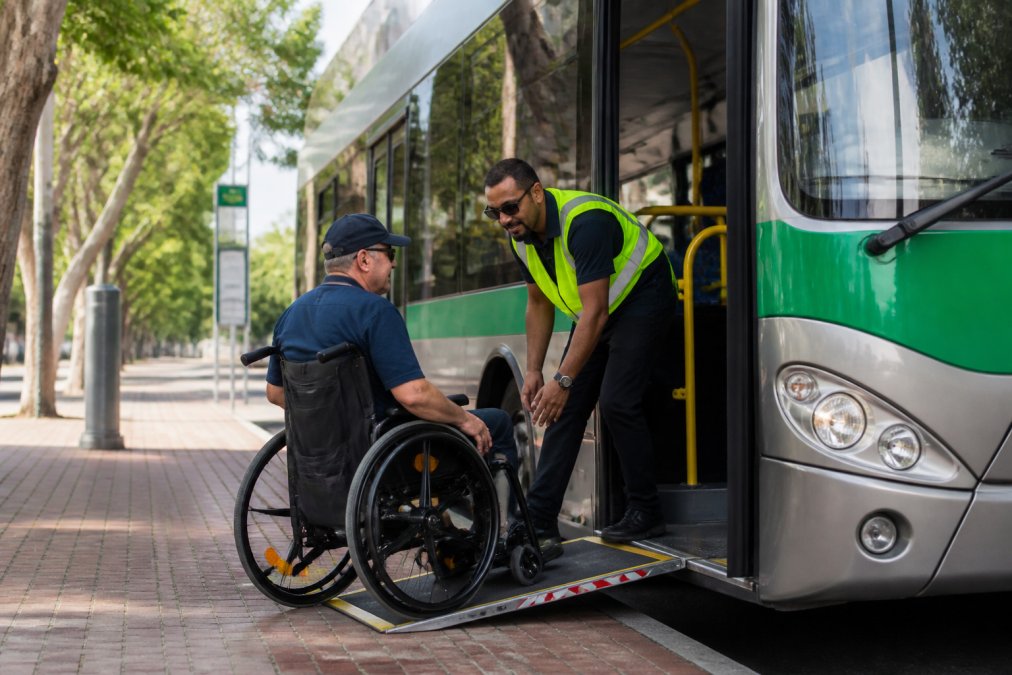
Ferries, which connect the CBD across the river, also provide level boarding, though capacity is more limited. A common mistake is assuming every bus stop is accessible; only stops with sufficient kerb height and space can deploy the ramp effectively. Transperth publishes an accessibility map, and checking it against your planned stop is essential. The network also provides hearing loops at major stations and supports mobility scooters within size limits, which is a detail many passengers overlook when planning longer trips across the Transperth accessibility services network.
The Missing Layer: Real-Time Accessibility Status
Most accessibility guides are static, they tell you a station has a lift, but not whether that lift is working right now. A lift outage at an interchange can turn a 10-minute trip into a 45-minute detour or leave you stranded.
The practical workaround is to build a pre-trip check into your routine. The Transperth website and app both publish live service alerts, but the information is not always easy to find. The most reliable method is to check the ‘Service Changes’ or ‘Alerts’ section on the Transperth website before you leave, specifically filtering for ‘Lift Outages’ or ‘Station Facilities’.
A second layer of checking is the real-time ‘Next Train’ indicator. If a train is delayed more than 10 minutes due to a lift fault, the disruption is usually flagged in the app’s push notifications. For buses, there is no real-time indicator for a broken ramp; the only way to know is to check the Transperth website’s ‘Bus Service Alerts’ for your route number.
Do not rely on third-party apps like Google Maps or Apple Maps for lift outage information. They do not receive Transperth’s live infrastructure alerts. Always check the official Transperth channels for the most current status before you travel.
For trips that involve a transfer, the interchange at hubs like Perth Station and Elizabeth Quay is well signed, but the walk between platforms can be lengthy. Allow extra time if you are transferring with a mobility aid. A lift outage at a transfer point like Claisebrook or McIver can force you to exit the station and re-enter on street level, which may not be accessible.
Wheelchair Accessible Taxi Booking: A Flexible Alternative
Wheelchair accessible taxi booking is often the most reliable option when public transport timetables or infrastructure fall short. Unlike trains and buses, a taxi provides door-to-door service, eliminating the challenges of interchange navigation and stop accessibility entirely. This matters most for medical appointments, early morning airport runs, or evenings and weekends when public transport frequency drops.
The booking process for an accessible taxi typically requires a phone call rather than hailing on the street, as not all vehicles in a fleet are modified. When you book, specify that you require a wheelchair-accessible vehicle. It is also worth confirming the type of ramp or lift the vehicle uses, as some passengers prefer a specific boarding method.
For those who need regular transport, establishing a relationship with a provider who understands your requirements simplifies every future booking. Consistent pricing is another consideration; some services apply surcharges for accessible vehicles or during peak hours. Look for a provider that offers transparent rates. A reliable operator will also track your flight for airport pickups.
Understanding NDIS Transport Funding Guidelines
The NDIS can fund transport support for participants who cannot use public transport independently due to their disability. The [NDIS transport funding(/ndis-transport-providers-perth-comparison/) guidelines | ndis.gov.au] are structured around what is deemed “reasonable and necessary” for each participant’s goals. This funding is not a blanket allowance; it is assessed based on your individual circumstances, living situation, and capacity to travel.
Funding typically falls into two categories: funding for occasional trips in your plan, or a regular transport allowance if you cannot drive and have no other support. The key distinction is that the NDIS generally will not fund transport if you are able to use accessible public transport options Perth offers, even if it is inconvenient. The scheme expects participants to use mainstream services first.
For participants who do receive transport funding, it can be used for wheelchair accessible taxi booking when this is identified as the most suitable mode. You should keep records of your trips, as the funding is managed against your plan budget. Reviewing the official guidance or speaking with your support coordinator before assuming you qualify is the right first step.
Comparing Accessible Public Transport Options Perth by Trip Type
Choosing between public transport and a booked taxi depends heavily on the trip itself. A direct train journey between two accessible stations is often the fastest and most cost-effective choice. However, the calculus changes when you factor in the walk to the station, the transfer wait, and whether your destination is near an accessible stop.
| Trip Type | Best Option | Why It Works | Key Consideration |
|---|---|---|---|
| CBD to Airport | Wheelchair-accessible taxi | Door-to-door, flight tracking | Avoids train-to-bus transfers with luggage |
| Medical Appointment | Taxi or community transport | Precise timing, no walking | Confirms accessible vehicle at booking |
| Daily Commute (peak) | Train | Most consistent lift access | Check station accessibility on both ends |
| Short Local Trip | Bus | High frequency, low-floor fleet | Confirm your stop has a usable ramp point |
| Evening/Weekend | Taxi | Reduced public transport frequency | Book ahead to guarantee availability |
Trains win for predictable, high-frequency commutes, while taxis win for flexibility and true door-to-door convenience. For anyone using mobility aids, the decision often comes down to the “last mile”. If your destination is more than a short roll from the bus stop or station, a direct service usually outweighs the cost difference.
Practical Tips for Independent Travel with Mobility Aids
Travelling independently with a mobility aid requires a slightly different mindset. The most important habit is to plan your route backwards: confirm the accessibility of your destination stop before you worry about your origin. Many passengers plan the first leg carefully and then find themselves stranded at the return stop.
Sensory-friendly travel tips matter too, even for those without a diagnosed sensory condition. The train network can be loud and crowded during peak hours. If noise and crowding are concerns, travelling outside the 7:30 am to 9:00 am window makes a noticeable difference. For passengers with visual impairments, carrying a backup plan, such as a pre-booked taxi number, provides peace of mind if you miss a connection.
For hearing-impaired passengers, visual display screens at stations and on buses show the next stop, but these can be hard to read from a seated position. Sitting near the front of the bus or the designated priority seating area improves visibility. Finally, always carry a charger for your phone; the Transperth journey planner and real-time service alerts are your best tools for adapting to disruptions on the fly.
The Intermodal Transfer: A Step-by-Step Walkthrough
The single hardest part of the Perth network for a wheelchair user is not the train or the bus, it is the transfer between them. Official guides say ‘transfers are available at major hubs’, but they rarely explain the physical reality. Here is what actually happens at Perth Station when moving from a bus to the underground train platforms.
First, buses arrive at the dedicated bus stands on Wellington Street, directly outside the station’s main entrance. The accessible bus stands are clearly marked, but the kerb ramp deploys only on the left side of the bus. The station entrance has automatic doors, but the sensor can be slow, allow a few seconds for them to open fully.
Once inside, the critical decision is which lift to use. Perth Station has multiple lifts, but not all go to every platform. The main lift near the information booth goes to Platforms 1 and 2 (the Joondalup and Mandurah lines). A separate lift near the William Street entrance serves Platforms 3 and 4 (the Midland and Fremantle lines). Using the wrong lift means exiting the paid area and re-entering through the other side.
The walk from the lift to the platform edge is generally flat with tactile paving, but the gap between the train and the platform can be wider on curved sections. On the Mandurah line, the platform curvature at Esplanade Station creates a noticeable gap; the train driver will make an announcement if the gap is too wide for a wheelchair, and you should board at the front carriage where the gap is smallest.
For a bus-to-bus transfer at a major hub like Elizabeth Quay, the principle is the same: check the platform numbers before you alight. The bus stands are arranged in a loop, and the accessible stands (numbers 1-4) are closest to the ferry terminal. If you are transferring to a ferry, the lift down to the jetty is on the eastern side of the terminal building.
When planning a transfer, use the Transperth journey planner and look for the ‘minimum connection time’ indicator. If your connection is less than 10 minutes, it is often safer to take the next service and avoid a rushed, stressful transfer with a mobility aid.
This level of detail is rarely published, which is why most wheelchair users learn these routes through trial and error. The alternative is to pre-book a wheelchair-accessible taxi for the first trip to a new destination, then switch to public transport once you know the layout.
Your Next Step to Stress-Free Travel
Navigating Perth’s transport network with a mobility aid does not have to be a daily struggle, but it does require a strategy that combines the best of public infrastructure with reliable booked services. The train network is excellent for predictable commutes, and the bus fleet is largely accessible, yet the gaps in the system, uneven stops, transfer distances, and reduced evening services, are where independent travel breaks down.
For those moments, a pre-booked wheelchair-accessible vehicle is the safety net that keeps your day on schedule. Universal Cabs offers a fleet that includes wheelchair-accessible vehicles, with 24/7 availability and consistent pricing for day, night, and airport trips. Our drivers know Perth routes well and use flight-tracking technology to ensure punctual airport transfers. When you need transport that arrives on time, every time, book your accessible ride with Universal Cabs and experience a service built around your schedule.
Frequently Asked Questions
How do I request assistance for Transperth bus or train services?
Transperth provides travel assistance for passengers who need help boarding or navigating the network. You can request assistance by contacting Transperth directly before your trip, ideally with advance notice so staff can be ready at your station. This service is particularly useful for passengers with mobility aids or visual impairments who need help with lift access, platform navigation, or boarding. For spontaneous trips, train stations with staffed booths can often assist on arrival, but booking ahead ensures a smoother experience.
Are all train stations equipped with lift access?
Most Transperth train stations have lift access and tactile paving to assist passengers with mobility aids or visual impairments. However, the level of access can vary between older and newer stations. It is wise to check the specific station’s accessibility features before you travel, particularly for interchange navigation. The Transperth website provides detailed facility information for each station, allowing you to confirm lift availability and plan your journey without unexpected barriers.
What is the difference between a wheelchair accessible taxi and standard public transport?
Wheelchair accessible taxis offer door-to-door service, providing a level of flexibility that fixed-route public transport cannot match. Unlike buses or trains, a taxi eliminates the need to navigate to stops or transfer between services. Bookings can be made for a specific time, which is ideal for medical appointments or airport transfers where punctuality is critical. This option is often preferred when the journey involves multiple transfers on the public transport network or when travelling outside peak service hours.
How do NDIS transport funding guidelines apply to taxi travel?
NDIS transport funding guidelines determine how participants can use their plan for travel. Funding can cover transport to access community activities or support independent travel, and the specific rules depend on your plan’s goals and budget. For taxi travel, including wheelchair accessible taxi booking, the NDIS may fund the trip if it is deemed reasonable and necessary for your stated goals. You should check your plan’s guidelines or speak with your support coordinator to confirm what transport costs are eligible before booking.
Getting where you need to go should be about the destination, not the anxiety of the journey. With the right combination of planning and a dependable transport partner, every trip is within reach. Get started with Universal Cabs and book your next accessible journey with confidence.
This article was written using GrandRanker