

Last Updated: October 30, 2026
Quick Summary
Safety features in wheelchair accessible vans include four-point tie-downs, a separate lap and shoulder belt mounted to the vehicle, and a ramp with raised edges and a secure latch. A wheelchair must stay locked in place, and the passenger must be held by a restraint that works independently of the chair. Ask your provider to confirm these checks before the trip.
- Most accessible vans use a four-point strap system, with straps hooked to the chair frame, not the wheels.
- Secure the chair in order: centre it facing forward, lock the brakes, attach four tie-downs, then fit the occupant restraint.
- Check that the ramp is fully deployed, flat on level ground, and locked before anyone rolls on.
- Ask your provider for a vehicle inspection checklist and who signs off on it.
- The safest spot for a wheelchair user is the securement area, facing forward, with the chair locked down.
Table of Contents
- What Makes a Wheelchair Accessible Van Safe to Travel In
- Wheelchair Tie-Down and Occupant Restraint Systems Explained
- Wheelchair Van Ramp Safety: What to Check Before Boarding
- Wheelchair Securement Instructions: How a Wheelchair Should Be Fastened
- The Wheelchair Accessible Vehicle Inspection Checklist to Ask For
- Seat Belts, Transfers and Choosing Where to Sit
- Booking a Wheelchair Accessible Van With Confidence
- Frequently Asked Questions
What Makes a Wheelchair Accessible Van Safe to Travel In
Safety features in wheelchair accessible rental vans are the systems that keep a wheelchair and its occupant secure during travel. These include tie-downs, occupant restraints, ramps, and vehicle design. Universal Cabs operates wheelchair accessible vehicles in its fleet, so the features below are the ones worth checking when you book.
The core idea is simple. A wheelchair must stay locked in place, and the person must be held by a restraint that works independently of the chair.
Research published through the National Library of Medicine’s PubMed Central on wheelchair transportation safety points to the same priorities: securement, restraint, and safe boarding. A chair that shifts during braking turns a routine trip into a risk.
A safe van gets four basics right:
- Tie-down points on the floor
- A separate seat belt for the passenger
- A ramp with raised edges and a secure latch
- A trained driver who checks the setup
Skip any one of these and the trip is compromised.
Wheelchair Tie-Down and Occupant Restraint Systems Explained
Wheelchair tie-down and occupant restraint systems are the anchors and belts that hold a wheelchair and its passenger in place. A tie-down secures the chair to the vehicle floor, while an occupant restraint holds the person. The two systems work as a pair, never as a substitute for each other.
Most accessible vans use a four-point strap system. Four straps hook to the chair frame and lock it down. The passenger then gets a separate lap and shoulder belt that anchors to the vehicle, not the chair.
Why separate? A wheelchair is not crash-tested as a seat. The restraint must come from the van itself.
What to look for:
- Four securement points, not two
- Straps in good condition, with no fraying
- A lap and shoulder belt mounted to the vehicle
- A driver who knows how to tension each strap
The literature review of wheelchair transportation safety treats securement and restraint as the foundation of safe travel.
Wheelchair Van Ramp Safety: What to Check Before Boarding
Wheelchair van ramp safety starts with the ramp itself. Check that it is fully deployed, flat on the ground, and locked. Then check the edges and the surface before anyone rolls on.
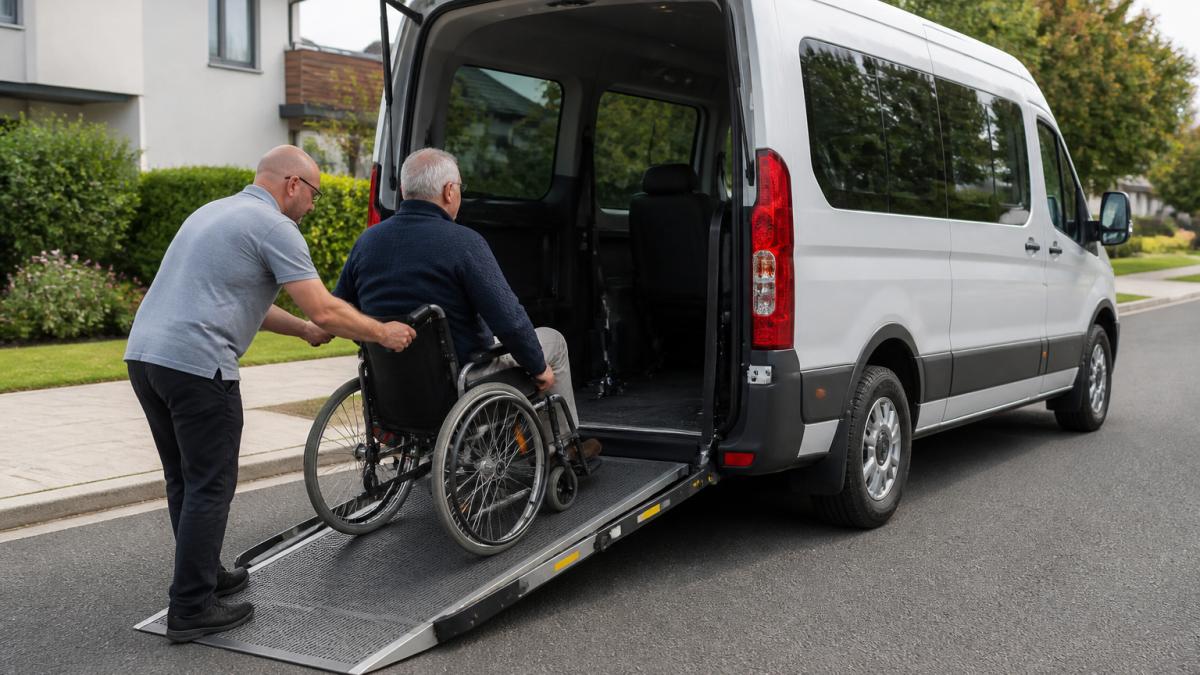
A quick pre-boarding check takes seconds:
- Ramp fully extended and resting on level ground
- Raised side edges in place
- Dry, clean surface with no loose gravel
- Weight capacity suited to the chair and passenger
- Driver positioned to guide, not rush
Watch out: a ramp that sits on a slope or a kerb edge can let a chair drift sideways. Level ground matters more than speed.
Non-slip surfaces and secure latches are features to look for on well-kept vans. If the ramp rattles or the latch feels loose, ask for another vehicle. A safe boarding is a slow, checked one.
Wheelchair Securement Instructions: How a Wheelchair Should Be Fastened
Wheelchair securement instructions follow a set order. Position the chair, apply the brakes, attach four tie-downs, tension them, then fit the occupant restraint. Each step builds on the last, so the sequence matters.
Here is how a wheelchair is typically fastened in an accessible van:
- Centre the chair facing forward in the securement area
- Lock the wheelchair brakes
- Hook the front two straps to the frame, then the rear two
- Tension all four until the chair cannot shift
- Fit the lap belt low across the hips
- Add the shoulder belt across the chest
- Check every strap by hand before moving off
A common mistake is hooking straps to wheels or footrests. Those parts can bend or detach. Straps belong on the frame.
The occupant restraint must sit against the passenger, not over the chair’s armrests. That keeps the belt doing its job.
The Wheelchair Accessible Vehicle Inspection Checklist to Ask For
A wheelchair accessible vehicle inspection checklist is a short list of checks a provider should confirm before your trip. Ask for it, and ask who signs off on it. A provider that cannot answer is a provider to question.
Use this checklist when you book:
- Ramp deploys, locks, and retracts smoothly
- Four tie-down straps present and undamaged
- Lap and shoulder belt mounted to the vehicle
- Non-slip floor and ramp surfaces
- Vehicle registration and insurance current
- Driver trained in securement
- Regular maintenance records available
You do not need to inspect the van yourself. You need to know the provider does.
Ask your provider to confirm these checks before the trip.
| Check | What to confirm |
|---|---|
| Ramp | Deploys, locks, and retracts smoothly |
| Tie-down straps | Four present and undamaged |
| Seat belts | Lap and shoulder belt mounted to the vehicle |
| Surfaces | Non-slip floor and ramp surfaces |
| Paperwork | Vehicle registration and insurance current |
| Driver | Trained in securement |
| Maintenance | Regular maintenance records available |
Seat Belts, Transfers and Choosing Where to Sit
Seat belts in an accessible van are not optional, even for short trips. The passenger restraint should always be worn, and it should anchor to the vehicle. A belt that clips only to the wheelchair offers far less protection.
Where should a wheelchair user sit? The safest spot is in the securement area, facing forward, with the chair locked down. Forward-facing travel is a common position in accessible vehicles.
Transfers need care too. Whether moving from chair to seat or staying in the chair, take it slowly and let the driver help where needed. Never let anyone rush a transfer at the kerb.
If you are unsure about belts or positioning, ask before the van moves. For more on restraints and your rights, see the Taxi Safety and Passenger Rights: A Guide. A good driver will walk you through it.
Booking a Wheelchair Accessible Van With Confidence
Booking a wheelchair accessible van comes down to asking the right questions up front. Readers ready to choose can compare wheelchair taxi services in Perth first. Confirm the vehicle type, the driver’s training, and the securement setup before you commit. If you are weighing the cost, read Is Wheelchair Taxi Transport Worth It?. A provider that answers clearly is easier to judge.
When you book with Universal Cabs, you can expect:
- Wheelchair accessible vehicles in the fleet
- 24/7 availability for appointments and airport runs
- Consistent pricing across day, night, and airport trips
Frequently Asked Questions
What safety features should a wheelchair accessible rental van have?
Look for four-wheel tie-down straps or a locking floor system, a separate lap-and-shoulder belt for the passenger, a ramp or lift with a working anti-slip surface and secure latch, and a trained driver who checks the securement before moving off. Ask whether the vehicle has been inspected recently and whether the provider follows a written checklist. Universal Cabs operates wheelchair-accessible vehicles, so you can ask what securement method will be used on your trip.
How do you secure a wheelchair in an accessible van?
The wheelchair is fixed to the floor with four straps, usually at the frame corners, and the brakes are locked. The passenger then uses a separate seat belt anchored to the vehicle, not to the wheelchair. Securements should be tight enough that the chair cannot shift, and the driver should test the straps by hand before departure. If you are unsure how your chair’s frame points should be attached, ask the provider before booking so the right vehicle is sent.
What is the difference between a wheelchair tie-down and a seat belt?
A tie-down holds the wheelchair itself in place so it cannot move during braking or a turn. A seat belt restrains the person. They are two separate systems and both are needed. A belt attached only to the wheelchair frame does not protect the passenger in a crash because the chair can move independently. Ask any provider to confirm that the passenger belt is anchored to the vehicle floor or wall, not to the chair.
Should a wheelchair user transfer to a vehicle seat during travel?
Transferring to a vehicle seat and using the built-in seat belt is generally the safer option where the person can transfer comfortably, because vehicle seats are designed and tested for crash loads. Staying in the wheelchair is common and acceptable when the chair is properly secured with a four-point tie-down and the passenger wears a separate vehicle-anchored belt. Discuss your preference when booking so the driver arrives prepared with the right equipment and time.
Safety on the road starts with the vehicle and the people running it. Universal Cabs provides wheelchair accessible vans with trained drivers, 24/7 availability, and transparent rates with no hidden spikes. Get started with Universal Cabs and book a wheelchair accessible van you can trust.
