

Table of Contents
- What Makes Wheelchair Taxi Transport Different
- How to Book Wheelchair Accessible Taxi Services
- Cost of Wheelchair Taxi vs Private Transport
- Government Subsidies and the Multi-Purpose Taxi Program
- Safety Standards and Vehicle Maintenance
- Reliability and Real-World Booking Lead Times
- Conclusion: Is It Worth Your Investment?
- Frequently Asked Questions
Last Updated: September 19, 2026
What Makes Wheelchair Taxi Transport Different
Wheelchair taxi transport features purpose-built hydraulic lifts, certified restraint systems, and drivers trained in disability awareness, essential when relying on transport for medical appointments, work, or social commitments.
Universal Cabs offers consistent pricing with no surge charges, no hidden fees, and flight-tracking technology that alerts drivers to delays, eliminating unnecessary waiting times.
The key question is whether reliability, accessibility, and cost justify wheelchair taxis over alternatives, which depends on your usage frequency, budget, and priorities.
Most wheelchair taxi services operate under regulated fare structures set by the Department of Transport. This means pricing is transparent and consistent across providers, a major advantage over ride-sharing platforms that use surge pricing.
How to Book Wheelchair Accessible Taxi Services
Booking takes 2-3 minutes online or by phone, with options to specify wheelchair space, driver assistance, or extra boarding time.
The booking process involves selecting locations, confirming wheelchair access and assistance needs, and receiving driver details with estimated arrival time.
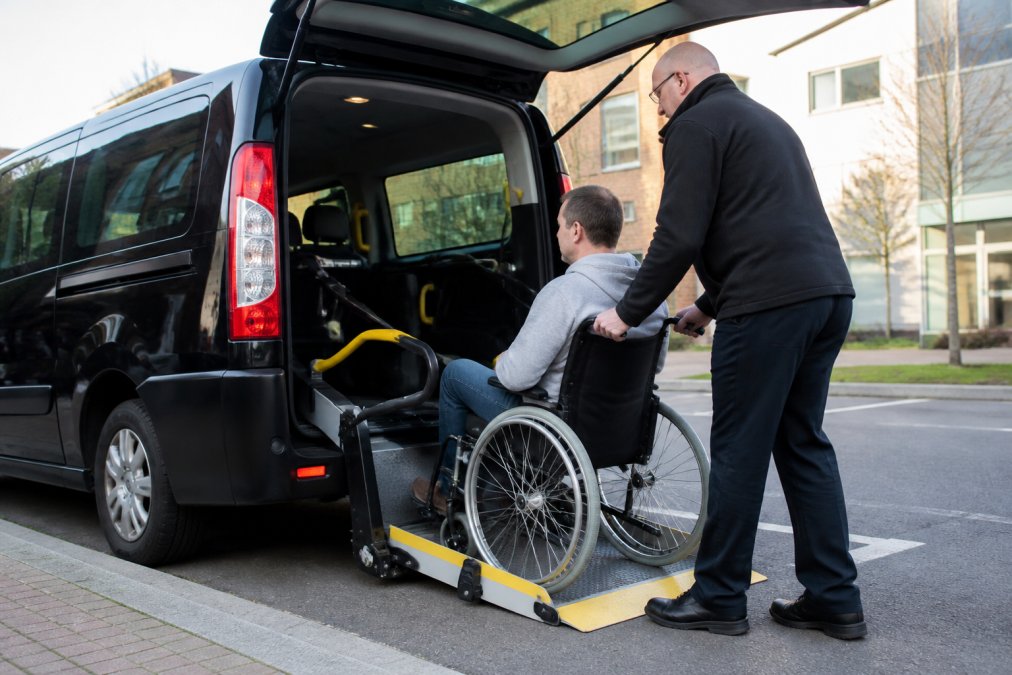
Universal Cabs prioritises quick response, though availability depends on fleet size.
Advance booking (24+ hours ahead) guarantees vehicle availability, essential for time-critical appointments. Many users book return journeys before arrival to ensure pickup availability.
Peak demand periods can stretch booking times significantly. If you have a time-critical appointment, book at least one day ahead or plan to call earlier than you think you’ll need pickup.
Cost of Wheelchair Taxi vs Private Transport
Wheelchair taxi fares are regulated by the Department of Transport with a metered base fare plus per-kilometre rate.
How regulated fares work: The Department of Transport sets uniform flagfall and per-kilometre charges across all licensed services. A typical 8-10 km journey costs $25-$35 with no surge multipliers, the same rate at 7 AM or 11 PM. This transparency contrasts with ride-sharing platforms, where the same journey costs $18 off-peak but $45-$60 during peak demand.
Real-world cost comparison:
Private vehicle ownership: True cost per kilometre is $0.80-$1.20 when combining registration ($200-$400), insurance ($800-$1,500), fuel, maintenance, and depreciation. Annual cost for regular use (3 trips weekly): $3,000-$4,000 minimum. Wheelchair-accessible vehicles cost significantly more.
Ride-sharing apps: Off-peak fares are $12-$18, but surge pricing during peak hours reaches $35-$50+. Wheelchair accessibility is inconsistent, with frequent cancellations when drivers realise accessibility is needed, creating budgeting and reliability risks.
Public transport: Costs $3-$5 per trip but accessibility varies by route and vehicle age. Multiple transfers often extend 10 km journeys to 45 minutes, and physical effort can outweigh cost savings for those with fatigue-related conditions.
Family or friend transport: Free upfront but creates dependency on others’ schedules, limiting independence and straining relationships, especially for work or medical appointments.
Cost-benefit analysis for different usage patterns:
Occasional use (2-4 trips per month): Wheelchair taxi costs $50-$140 monthly. Worth it if reliability for critical journeys (medical appointments, interviews) matters more than saving $10-$20 per trip.
Regular use (2-3 trips per week): Wheelchair taxi costs $200-$420 monthly ($2,400-$5,040 annually), cheaper than private ownership and more reliable than ride-sharing.
Frequent use (4+ trips per week): Wheelchair taxi costs $400-$840 monthly. Private ownership becomes cost-competitive only if you can afford upfront purchase and maintenance.
The Multi-Purpose Taxi Program subsidy (see next section) reduces your out-of-pocket cost, fundamentally changing the cost equation. At this subsidised rate, wheelchair taxis are almost always cheaper than private vehicle ownership for regular users.
Hidden cost advantages of regulated taxis: No surge pricing, hidden fees, or cancellation charges. Transparent metering enables reliable budgeting and reduces financial stress.
Government Subsidies and the Multi-Purpose Taxi Program
This is where wheelchair taxi transport becomes genuinely affordable for eligible users. The Multi-Purpose Taxi Program (MPTP) provides subsidies that cover a significant portion of taxi fares for people with disabilities, fundamentally changing the cost-benefit calculation. However, many users are unaware of the program or don’t understand how to access it.
How the MPTP works: Eligible passengers receive a subsidy card that reduces their out-of-pocket cost per trip. The subsidy is administered through the Department of Transport and applies to all registered wheelchair taxi services, including Universal Cabs. When you book a taxi, you provide your subsidy card number, and the subsidy is applied automatically at the end of the journey. You pay only your out-of-pocket portion; the Department of Transport reimburses the service provider for the subsidised amount. No forms, no claims, no delays, the reduction happens at point of service.
Subsidy amounts and savings: The MPTP typically subsidises 50% of the metered fare for eligible users, though the exact percentage can vary based on your assessment outcome and any changes to the program. This means a $30 trip costs you $15. A $40 trip costs $20. Over a month of regular use (8-12 trips), the savings accumulate quickly. Someone using wheelchair taxis twice weekly (approximately 8 trips per month) saves $120-$160 monthly, or $1,440-$1,920 annually. This transforms wheelchair taxis from a significant expense into an affordable transport option comparable to public transport costs.
Eligibility criteria: To qualify for the MPTP, you must meet specific criteria related to disability or mobility limitation. General eligibility includes:
- A permanent or long-term disability that significantly restricts your ability to use public transport or private vehicles
- Conditions such as spinal cord injury, cerebral palsy, multiple sclerosis, severe arthritis, amputation, or other mobility-limiting conditions
- Age-related mobility restrictions (though eligibility varies)
- Vision impairment or hearing impairment that affects safe independent travel
- Intellectual or psychiatric disability that affects your ability to use standard transport independently
You do not need to use a wheelchair to qualify; the program covers all disabilities that restrict independent travel. However, the assessment is individualised. Two people with the same diagnosis might have different eligibility outcomes based on their functional capacity and support needs.
Application process and timeline: To apply, contact the Department of Transport or visit their website to request an MPTP application form. You’ll need to provide:
- Medical evidence of your disability or mobility limitation (a letter from your GP or specialist is usually sufficient)
- Details of how your condition affects your ability to use standard transport
- Information about your current transport needs and frequency of use
The Department of Transport will assess your application. Once approved, your subsidy card is issued by post, and you can begin using it immediately with any registered taxi service. If your application is declined, you can request a review or appeal.
Verification and current details: Subsidy levels, eligibility criteria, and application processes can change. Before applying or budgeting based on subsidy assumptions, verify current details on the Department of Transport website or call their customer service line. The program has been stable for several years, but policy changes do occur, and it’s essential to have accurate information.
Real-world impact on the ‘is it worth it’ question: Without the MPTP subsidy, wheelchair taxi transport is worth it primarily for regular users (3+ trips per week) or those with access to government subsidies. With the subsidy, the equation shifts dramatically. A user making 2 trips per week pays approximately $240-$360 monthly out of pocket (after subsidy), compared to $400-$600 for private vehicle ownership or $80-$120 for public transport (if accessible routes are available). The subsidy makes wheelchair taxis competitive with or cheaper than all alternatives while offering superior reliability and accessibility.
If you don’t qualify: If your assessment determines you don’t meet MPTP eligibility, you may still qualify for other support programs. Some disability services organisations offer transport vouchers or subsidies. Community transport services operate in some areas and charge reduced fares.
If you have a diagnosed mobility limitation or disability, applying for the Multi-Purpose Taxi Program subsidy should be your first step before deciding whether wheelchair taxi transport is worth it. The subsidy can reduce your costs by 50% or more, making regular wheelchair taxi use more affordable than private vehicle ownership or unreliable ride-sharing alternatives. The application is straightforward. Verify current eligibility and subsidy amounts on the Department of Transport website before budgeting.
Safety Standards and Vehicle Maintenance
Wheelchair taxi vehicles must meet strict safety standards set by the Department of Transport. These include:
- Hydraulic lifts or ramps certified for safe operation
- Wheelchair restraint systems that meet Australian Standards
- Regular mechanical inspections and maintenance schedules
- Driver training in passenger assistance and safety protocols
Not all taxis claiming to be wheelchair-accessible meet the same safety standards. Verify that any service you use operates under Department of Transport regulation and has current vehicle safety certifications.
Reliability and Real-World Booking Lead Times
Real-world booking times depend on several factors:
Off-peak hours (10 AM-3 PM weekdays): Typically 10-20 minutes from booking to pickup. Fewer passengers are using transport, so vehicles are available.
Conclusion: Is It Worth Your Investment?
Wheelchair taxi transport is worth it if you use it regularly, value reliability, and want independence without depending on others. The combination of regulated pricing, government subsidies, and professional service creates an affordable, dependable transport option.
Frequently Asked Questions
Can taxis charge more for wheelchair users in Western Australia?
No. Wheelchair taxi transport in Perth operates under regulated metered fares set by the WA Department of Transport. Drivers cannot charge premium rates based on a passenger’s disability or use of a wheelchair. Fares remain consistent regardless of the time of day or whether it’s a weekend, ensuring transparent pricing for all users.
How does the Multi-Purpose Taxi Program work for passengers?
The Multi-Purpose Taxi Program in Western Australia provides eligible passengers with subsidies on taxi fares. Eligible users can access reduced rates on wheelchair-accessible taxi journeys. To determine your eligibility and subsidy amount, contact the WA Department of Transport directly or ask your taxi service provider about how to apply. Subsidies can significantly reduce your transport costs.
What safety features should I expect in a wheelchair-accessible taxi?
Wheelchair-accessible taxis must include hydraulic lifts or ramps for safe boarding, certified wheelchair restraint systems, and proper vehicle maintenance. Drivers receive training in disability awareness and passenger assistance. Before booking, confirm that the vehicle has functioning safety equipment and that the driver is experienced in securing mobility aids securely during transit.
How quickly can I book a wheelchair-accessible vehicle in Perth?
Booking lead times vary depending on demand and availability. Peak periods may require advance notice, while some services offer same-day or next-day availability. Universal Cabs provides 24/7 booking options via phone or online with minimal waiting times across Perth suburbs. Contact your chosen provider directly to confirm availability for your specific date and time.
Universal Cabs offers 24/7 wheelchair-accessible transport across Perth and suburbs with transparent, consistent pricing and no surge fees. Book now through their website or phone line to experience the difference reliable, professional service makes for your daily mobility needs.