

Table of Contents
- Understanding Wheelchair Accessible Van Hire in Perth
- Wheelchair Accessible Taxi Rates and Daily Hire Costs
- Vehicle Features and Accessibility Specifications
- NDIS Wheelchair Accessible Transport and Funding
- Accessible Van Rental Requirements and Booking Process
- Long-Term vs Short-Term Hire Options
- Insurance Coverage and Roadside Assistance
- Airport Transfers and Interstate Travel
Last Updated: August 30, 2026
Understanding Wheelchair Accessible Van Hire in Perth
Wheelchair accessible van hire in Perth provides essential transport solutions for individuals with mobility needs. Universal Cabs operates a diverse fleet of purpose-built wheelchair accessible vehicles designed to meet accessibility standards and passenger comfort requirements across Perth and surrounding suburbs.
A wheelchair accessible van is a vehicle specifically modified to accommodate passengers using wheelchairs or mobility aids, featuring ramps or lifts, secure restraint systems, and spacious interiors that allow safe boarding and travel. These vehicles differ fundamentally from standard taxis in their engineering, safety features, and operational requirements.
Understanding the options available, from daily rates to long-term arrangements, helps you make informed decisions about your transport needs and access the independence and dignity that reliable wheelchair accessible van hire provides.
Wheelchair Accessible Taxi Rates and Daily Hire Costs
Daily hire costs vary based on vehicle type, rental duration, time of day, distance travelled, and additional services required. Universal Cabs recommends contacting the team directly for a transparent quote tailored to your specific journey.
Pricing structures typically include a base rate plus per-kilometre charges, though some operators offer daily flat rates for extended bookings. Universal Cabs guarantees transparent, consistent pricing without hidden spikes for day, night, or airport trips, meaning you’ll know the full cost before booking.
Short-term hire generally costs more per kilometre than long-term arrangements, which often attract negotiated daily or weekly rates. For regular users requiring transport multiple times weekly, discussing a formal arrangement with your provider can yield significant savings compared to per-journey pricing.
When comparing costs across providers, ask whether the quoted rate includes the vehicle, driver expertise, insurance coverage, and roadside assistance. Understanding what’s included prevents budget surprises and helps you compare genuine like-for-like pricing.
Vehicle Features and Accessibility Specifications
Wheelchair accessible vehicles come in several configurations, each designed to meet different passenger needs. Understanding the specifications ensures the vehicle matches your requirements before booking.
Ramp Access and Boarding Options
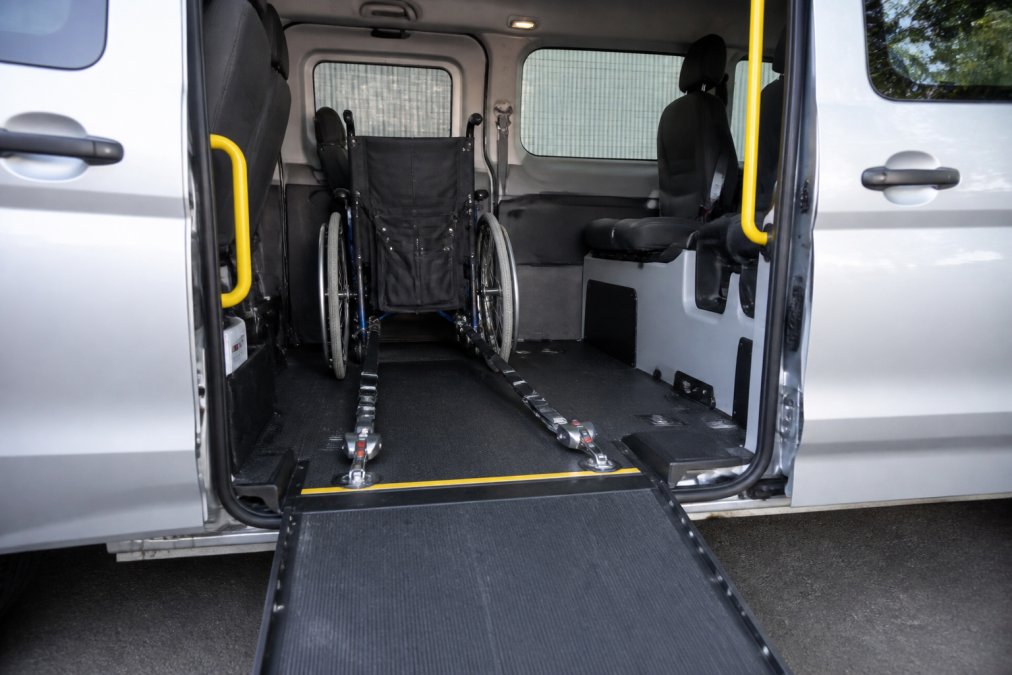
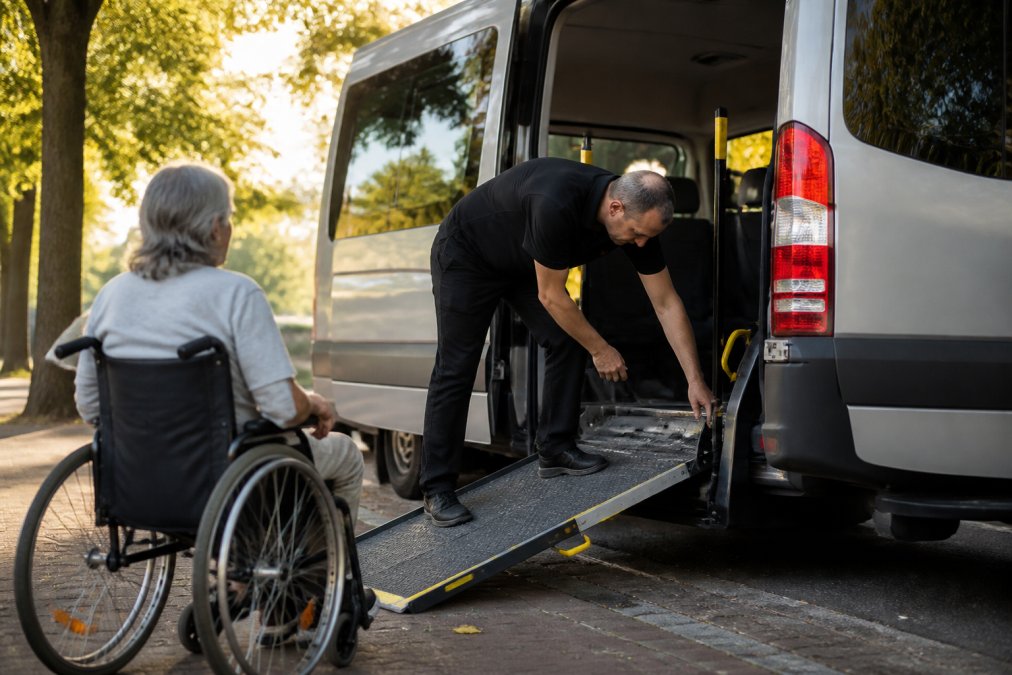
Manual ramps deploy from the vehicle’s side or rear, creating a sloped pathway that wheelchair users can navigate independently or with assistance. They are straightforward to operate, require minimal maintenance, and typically have a gradient of 1:8 to 1:12 with textured surfaces to prevent slipping.
Automatic ramps and lifts use hydraulic or electric systems to lower a platform to ground level, reducing physical effort required from the passenger or caregiver. These systems support loads up to 300 kg and operate smoothly, though they require more maintenance and may occasionally experience mechanical delays.
Both systems meet accessibility standards when properly maintained. Your choice depends on personal preference, physical capability, and the specific vehicle’s configuration. When booking, specify your preference; most providers can accommodate either type.
Assessing Vehicle Fit for Your Wheelchair or Mobility Aid
Booking a vehicle only to discover it’s too narrow or too low creates frustration. Assessing fit before booking takes five minutes and prevents this problem.
Measure your wheelchair or mobility aid. Before contacting a provider, measure three dimensions:
- Width: Measure the widest point including armrests or attachments. Most manual wheelchairs are 60-65 cm wide; powered wheelchairs and scooters range from 65-90 cm.
- Length: Measure from the back of the chair to the front of the footrest.
- Height: Measure from the ground to the highest point of your chair.
Ask the provider for vehicle dimensions. Request the internal dimensions of the accessible van:
- Doorway width: Most accessible vans have doorways 75-85 cm wide.
- Interior width: Typically 150-180 cm, allowing space for the wheelchair and passenger seating.
- Interior height: Most accessible vans have 180-200 cm of headroom.
- Wheelchair space dimensions: Ask whether this space is forward-facing or side-facing.
Cross-check for fit. Your chair width should be at least 10 cm narrower than the doorway width. Your chair length should fit within the designated wheelchair space with room for the restraint system. Your chair height should be at least 20 cm lower than the interior height.
If your measurements are close to the vehicle’s limits, ask whether you can inspect the vehicle before committing or request photos of the wheelchair space.
Passenger Capacity and Restraint Systems
A typical accessible van seats the driver plus 4-6 additional passengers, with one or more wheelchair spaces integrated into the seating layout. Some vans accommodate two wheelchair users; others prioritise passenger comfort with fewer seats and more space.
Restraint systems secure wheelchairs and passengers during transit using four-point or six-point attachment mechanisms that connect to the wheelchair frame itself (peer-reviewed research). These attachments are quick-release, allowing you to board and exit without removing the chair from the vehicle. The restraint process typically takes 1-2 minutes.
Drivers trained in proper restraint installation ensure passengers are secured correctly before departure. Professional operators maintain all vehicles to ensure restraint systems function reliably and safely on every journey.
NDIS Wheelchair Accessible Transport and Funding
The National Disability Insurance Scheme (NDIS) provides funding for eligible participants to access transport services, including wheelchair accessible vehicle hire, as part of their individualised plans.
NDIS Eligibility and Transport Funding
NDIS participants can use their funding to pay for transport services that support their goals and participation in community activities. Wheelchair accessible taxi services and van hire frequently qualify as funded transport options when they’re essential to the participant’s independence and social participation.
According to the NDIS official guidelines on transport and travel, participants can fund transport that enables them to access employment, education, community participation, and social connection. Transport funding typically sits within your core supports or capacity building budget, depending on how your plan is structured.
Step-by-Step NDIS Reimbursement Process
Step 1: Confirm your plan includes transport funding. Log into your NDIS portal or contact your plan manager to verify that transport is listed as a funded support category and check your available budget.
Step 2: Verify the provider’s NDIS status before booking. Ask your transport provider whether they are NDIS-registered, NDIS-approved, or willing to invoice the NDIS directly. Confirming this upfront prevents booking a provider you cannot pay through NDIS.
Step 3: Provide your NDIS details at booking. Supply your NDIS participant number and plan manager details (if applicable). This allows the provider to invoice correctly and link the service to your plan.
Step 4: Retain receipts and journey records. Keep all receipts, invoices, and booking confirmations. Record the date, time, destination, and purpose of each journey. This documentation supports your reimbursement claim and demonstrates the service aligns with your plan goals. (Source: National Disability Insurance Scheme (NDIS))
Step 5: Submit claims through the correct channel. If your plan manager is managing your funds, forward receipts and journey details to them for processing. If you’re self-managing, log into your NDIS portal and upload receipts under the relevant support category. If using a registered provider, they may submit claims directly.
Step 6: Allow processing time. NDIS typically processes reimbursement claims within 5-10 business days of receipt. If you haven’t received confirmation within two weeks, contact your plan manager or the NDIS directly.
Payment Methods and Provider Arrangements
Direct invoicing to NDIS. The provider invoices the NDIS directly, and payment is processed to their account. No upfront payment is required from you; the provider handles all billing.
Plan manager invoicing. Your plan manager receives the invoice, verifies it aligns with your plan, and processes payment. You provide receipts to your plan manager, who handles the claim.
Participant reimbursement. You pay the provider upfront, retain the receipt, and submit it to the NDIS or your plan manager for reimbursement. Reimbursement is processed back to your nominated bank account.
Universal Cabs works with all three methods and can advise which suits your plan structure.
Maximising Your Transport Budget
NDIS participants often have limited transport funding. Combining multiple appointments into a single trip, booking longer-term arrangements (which attract lower daily rates), and using accessible public transport for some journeys can extend your available funds.
If your current transport funding is insufficient, you can request a plan review. Document your transport needs, frequency of journeys, and any barriers to participation caused by transport limitations. Many participants find that discussing their transport needs with their provider helps identify cost-effective solutions.
Accessible Van Rental Requirements and Booking Process
Booking a wheelchair accessible van involves several steps to ensure the vehicle meets your needs and the driver has essential information about your accessibility requirements.
Advance Booking and Lead Times
Advance booking allows providers to confirm vehicle availability and assign an appropriately trained driver to your journey. Most accessible vehicle operators recommend booking at least 24-48 hours ahead, though emergency bookings are sometimes available with shorter notice.
Lead time requirements exist because wheelchair accessible vehicles represent a smaller portion of most fleets. Advance notice helps dispatchers allocate resources efficiently and ensures your driver has time to prepare the vehicle and review any specific accessibility needs you’ve communicated.
Universal Cabs accepts bookings via phone or online, with 24/7 availability across Perth and surrounding suburbs. Providing details about your accessibility requirements during booking, such as whether you need a manual or automatic ramp or the type of mobility aid you use, allows the team to assign the most suitable vehicle and driver.
Documentation and Hire Agreement
Before boarding, you’ll complete a hire agreement that outlines the journey details, costs, payment method, and any special conditions. This document protects both you and the provider by establishing clear expectations.
The hire agreement typically includes the passenger’s destination, estimated distance and duration, agreed fare or rate structure, payment terms, and any accessibility or safety requirements relevant to the journey. For NDIS-funded transport, the agreement may reference your NDIS plan details and funding arrangement.
Drivers are trained to discuss accessibility needs before departure, confirming that restraint systems are correctly applied and that you’re comfortable with the vehicle configuration.
Long-Term vs Short-Term Hire Options
Short-term hire suits occasional users needing transport for specific appointments or events without regular patterns. You pay only for journeys you take, with no ongoing commitment.
Long-term hire typically involves weekly or monthly agreements with negotiated daily rates, often significantly lower than per-journey pricing. Regular users, those commuting to work multiple times weekly, attending ongoing medical appointments, or managing consistent activity schedules, usually benefit from formal long-term arrangements. These agreements guarantee vehicle availability, allow drivers to learn your preferences and accessibility needs, and provide budget certainty through fixed monthly costs.
Many long-term users appreciate the relationship-building that occurs with consistent drivers. A driver who understands your specific accessibility requirements, preferred boarding pace, and communication style can provide more personalised service.
Universal Cabs offers flexible arrangements from single journeys to ongoing contracts, accommodating both short-term and long-term needs.
Insurance Coverage and Roadside Assistance
Professional transport operators carry public liability insurance, which covers injury or damage claims arising from their service. Passenger injury insurance may also apply, providing additional coverage specific to transport-related incidents.
Roadside assistance covers unexpected vehicle breakdowns, mechanical failures, or accidents that leave you stranded. Quality providers include roadside assistance in their service, ensuring that if the vehicle experiences problems during your journey, professional help arrives promptly and alternative transport is arranged to get you to your destination.
Universal Cabs maintains all vehicles to high standards and includes roadside assistance as part of the service commitment. When booking, confirm what insurance and assistance provisions apply to your specific journey, particularly for long-distance or interstate travel.
Airport Transfers and Interstate Travel
Airport transfers require precise timing to align with flight schedules. Universal Cabs uses flight-tracking technology to monitor flight status, allowing drivers to adjust pickup times based on actual departure times rather than scheduled times.
For airport pickups, Universal Cabs recommends booking well in advance, ideally when you book your flight, and confirming your flight number at least 24 hours before departure. Providing your mobile number ensures the driver can contact you if any issues arise.
Interstate travel in a wheelchair accessible vehicle requires planning beyond standard long-distance taxi considerations. Confirm that the vehicle is suitable for extended driving, that rest stops along the route are accessible, and that your driver is experienced with longer journeys. Discuss fuel stops, meal breaks, and overnight arrangements if the journey spans multiple days.
According to the Australasian Society of Disability Medicine guidelines on transport accessibility, accessible vehicles used for extended travel should meet specific comfort and safety standards, including adequate suspension for long-distance comfort and appropriate climate control.
Universal Cabs coordinates interstate journeys with attention to accessibility requirements throughout the entire route, not just at the origin and destination.
Frequently Asked Questions
How much does wheelchair accessible van hire cost per day?
Pricing for wheelchair accessible van hire depends on hire duration, vehicle type, distance travelled, and specific accessibility features required. Base rates vary between short-term daily hires and long-term rental arrangements. For current pricing and a personalised quote tailored to your needs, contact Universal Cabs directly via their website or phone to discuss your exact requirements and receive transparent pricing without hidden fees.
Can I access NDIS funding for wheelchair accessible transport?
NDIS participants may be able to claim transport costs under their funding plan if the transport supports their goals and is a reasonable and necessary support. The amount available and whether van hire is covered depends on your individual plan and circumstances. You'll need to check your NDIS plan details or contact your NDIS planner to confirm eligibility. Universal Cabs can provide invoices and documentation to support NDIS claims where applicable.
What accessibility features should I look for in a wheelchair accessible rental vehicle?
Key features include a reliable ramp system (manual or automatic), secure wheelchair restraint systems, adequate headroom and cabin space, climate control, and professional drivers trained in accessibility support. Check whether the vehicle has been modified to meet accessibility standards and ask about specific features that match your mobility needs. Universal Cabs can discuss vehicle specifications during booking to ensure the right vehicle is reserved for your requirements.
How far in advance should I book a wheelchair accessible van?
Booking as far in advance as possible ensures vehicle availability, especially for specific accessibility requirements. For regular appointments or long-distance travel, booking several days ahead is recommended. Universal Cabs accepts bookings online and by phone, and their team can advise on lead times based on your travel date and location. Last-minute bookings may be accommodated depending on fleet availability.
Reliable wheelchair accessible transport shouldn’t require extensive research or compromise on safety and comfort. Universal Cabs provides 24/7 accessible vehicle hire across Perth with transparent pricing, experienced drivers trained in accessibility support, and flight-tracking technology that ensures punctual airport transfers. Book now to experience transport tailored to your mobility needs, with professional service that prioritises both your safety and your independence.
This article was written using GrandRanker