

Table of Contents
- Plan your journey before you travel
- Safe night transport on public transit
- Staying safe on trains at night
- Using taxis and ride-share safely after dark
- How to report anti-social behaviour on public transport
- Situational awareness and personal security
- Emergency help and security assistance
- Conclusion
Last Updated: August 14, 2026
Plan your journey before you travel
Planning your route, checking service times, and understanding your options dramatically reduces risks associated with late-night travel. Begin by researching public transport options and checking last service times for buses and trains, missing the final service means you’ll need alternative transport. Use official route planners to map your journey, noting which stops are well-lit. Consider the time of night you’ll travel; very late journeys often have fewer passengers and reduced security presence. For shift workers, investigate whether ride-share or taxi services might be more reliable than waiting at empty stations. Check weather conditions and allow extra time on poor nights. Inform someone you trust about your travel plans, route, and expected arrival time, this creates a safety net if something goes wrong.
Safe night transport on public transit
Public transport remains one of the safest ways to travel at night with basic precautions. The key is positioning yourself strategically and staying aware throughout your journey.
Choosing well-lit waiting areas and platforms
Never wait in dark corners or areas obscured from view. Position yourself near ticket offices, information booths, or CCTV cameras, these are monitored and typically busier. Stand where the driver can see you clearly. If a bus or train arrives and you feel unsafe for any reason, let it pass and wait for the next service. Your instinct matters. Avoid standing alone on empty platforms; consider waiting in the station building or moving to a busier stop if one is nearby.
Staying alert on buses and trains
Sit near other passengers rather than alone at the back. On buses, sit near the driver; on trains, choose carriages with other passengers visible and sit facing the direction of travel. Keep your mobile phone accessible but not obviously on display. Keep headphones at reasonable volume so you can hear announcements and your surroundings. Stay awake and aware, fatigue makes you vulnerable to theft and you might miss your stop. If you’re exhausted, consider a taxi or ride-share instead. Watch for suspicious activity and move away from anyone behaving aggressively. Report concerning behaviour to the driver or transit staff immediately.
Staying safe on trains at night
Choose your carriage carefully. Many trains have designated safer carriages; check signage or ask staff. Sit in the middle sections where there’s better visibility and more passengers. Understand the emergency systems, every train has emergency communication equipment, intercoms, emergency buttons, and alarm cords. Know where these are located and use them immediately if you need help. Get off and wait in the station if your stop is coming up, moving toward the doors a minute before arrival. If the station looks unsafe or unmanned, stay on the train and get off at a busier stop, then arrange alternative transport.
Transport safety guidance from the government transport authority
Using taxis and ride-share safely after dark
Taxis and ride-share services offer direct transport without waiting at stops or stations. Always book through official channels using established taxi companies or verified ride-share apps rather than hailing unmarked vehicles. Legitimate services have tracking systems, driver identification, and accountability.
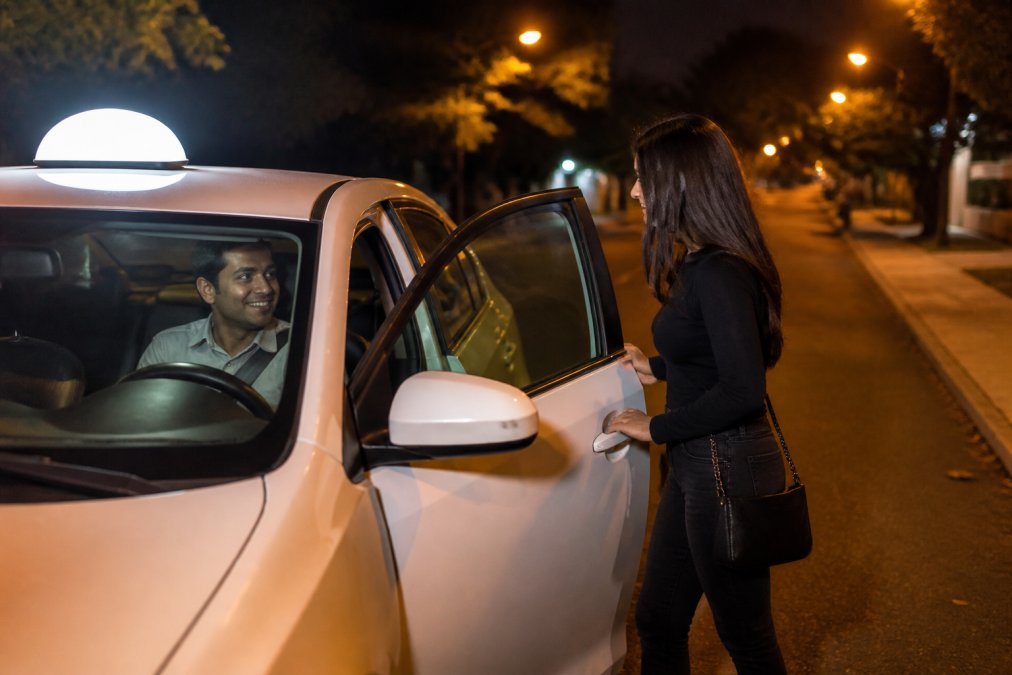
Verify the vehicle before entering by checking the registration plate matches your booking confirmation and comparing the driver’s photo. Share your journey details by sending a friend or family member a real-time tracking link if available, or at minimum text them the vehicle registration, driver name, and destination. Sit in the back seat and keep doors unlocked until you’re ready to close them. Keep your phone charged and accessible. Don’t feel obligated to engage in conversation with the driver.
For longer journeys, Universal Cabs offers 24/7 reliable service with experienced drivers who know local routes well. Their transparent pricing means no surprises when you arrive at your destination, with rates staying consistent regardless of time of night or demand. When you arrive at your destination, wait until you’re safely inside before rating the driver or ending the journey in the app. If the address is dark or seems unsafe, ask to be dropped at a nearby well-lit location instead.
How to report anti-social behaviour on public transport
Reporting incidents protects you and future passengers. Anti-social behaviour ranges from verbal harassment to threatening behaviour and violence. If it made you feel unsafe, it’s worth reporting. Report immediately to transit staff or the driver, they’re trained to handle these situations and can intervene in real time. Use official reporting channels after the fact through online forms, phone lines, or apps. Provide as much detail as you remember: date, time, location, description of the person involved, and exactly what happened. Contact police if you’re threatened, assaulted, or feel in immediate danger by calling 000 for incidents happening now, or contacting your local police station for past incidents.
Guide to reporting public transport incidents
Situational awareness and personal security
Situational awareness is your most powerful safety tool. When you board a bus or train, notice who’s around you, how many staff are visible, and where the exits are. This mental map takes seconds but helps you notice when circumstances change.
Trust your gut instinct. If you feel unsafe around a particular person, location, or vehicle, act on that feeling. Move away, get off early, or request a different taxi. Keep your valuables secure and out of sight, keep your phone in a pocket rather than your hand, and wear a backpack in front of you on crowded transport. Stay connected by keeping your phone charged and having emergency contacts saved. Be aware of your exits on buses and trains, and identify nearby well-lit areas where you could seek help.
Emergency help and security assistance
Emergency communication systems are available on all trains and most buses. Look for emergency intercoms, alarm cords, or emergency buttons that connect you directly to control centres or drivers. Use them if you feel threatened or need medical assistance. Security assistance is available at most stations through staff members and security personnel. Know the emergency number: call 000 in Australia for immediate police, ambulance, or fire service response. Many transport operators have text-based emergency reporting for people who are deaf or hard of hearing. Keep a list of emergency contacts including local taxi companies, trusted friends or family, and your local police station.
Emergency response procedures for public transport
Safe night transport requires planning, awareness, and the willingness to prioritise your safety over convenience. When you need reliable transport after dark, Universal Cabs provides 24/7 service with experienced drivers, transparent pricing with no late-night surcharges, and flight-tracking technology for punctual arrivals. Whether you’re a regular late-night commuter or travelling occasionally after hours, having a trusted transport option means you can travel with confidence. Book now to arrange your safe journey.
| Safety Strategy | Application | Benefit |
|---|---|---|
| Plan your journey | Check routes and last service times | Prevents being stranded or making unsafe decisions |
| Choose well-lit areas | Wait near ticket offices and CCTV | Deters anti-social behaviour and improves visibility |
| Stay alert on vehicles | Sit near other passengers and driver | Reduces vulnerability to theft and harassment |
| Report incidents | Use official channels and transit staff | Protects you and future passengers |
| Use emergency systems | Know where intercoms and alarms are | Enables immediate help when needed |
| Book through official services | Use established taxi companies or apps | Creates accountability and safety tracking |
Frequently Asked Questions
How can I stay safe using public transport late at night?
Use well-lit waiting areas and platforms, keep your phone charged, sit near the driver or conductor on buses, and stay aware of your surroundings. Choose carriages with other passengers on trains. Plan your route beforehand and let someone know your travel plans. Avoid displaying valuables and keep bags close. If you feel unsafe, move to a different carriage or speak to staff immediately.
How do I report anti-social behaviour on public transport?
Report incidents to the driver or conductor immediately if safe to do so. Use emergency help points on trains and buses, they connect you directly to security staff. You can also contact Transperth's customer service after your journey or report to local police if the behaviour is threatening. Note the time, location, carriage number, and a description of the person involved to help with investigations.
What should I do if I feel unsafe waiting for a bus or train at night?
Move to a well-lit, visible area away from bushes or dark corners. Stay near other passengers if possible. Keep your phone accessible and consider calling a trusted contact. Use emergency help points if available at the station. Don't hesitate to ask staff for assistance or request to wait in a staffed area. If you feel genuinely threatened, contact police on 000.
Is it safer to use a taxi or ride-share for late-night travel?
Both can be safe when you take precautions. Taxis are regulated and drivers are trained; confirm the vehicle registration before entering. Ride-share apps provide driver details and GPS tracking. For either option, share your trip details with a friend, sit in the back, keep doors locked until departure, and trust your instincts, if something feels wrong, cancel and use an alternative. Professional taxi services often have experience with late-night safety protocols.
This article was written using GrandRanker