

Table of Contents
- Why Wheelchair Taxi Services Matter for Perth Families
- What Is a Wheelchair Accessible Vehicle (WAV)?
- Multi-Purpose Taxi Program WA: Subsidised Travel Explained
- NDIS Transport Funding for Children: A Step-by-Step Guide
- Wheelchair Accessible Taxi Booking Tips for Parents
- School Pickups, Therapy Runs and Recurring Trips
- Choosing a Wheelchair Taxi Provider in Perth
- Frequently Asked Questions
Last Updated: September 24, 2026
Why Wheelchair Taxi Services Matter for Perth Families
Getting a child with mobility difficulties to school, therapy, or a medical appointment should not depend on whether a standard car can fit a wheelchair. This guide from Universal Cabs explains how a perth wheelchair taxi for disabled children works, what funding is available, and how to book with confidence. A wheelchair taxi is a vehicle built or modified to carry a passenger who stays in their wheelchair, secured safely for the whole trip.
What Is a Wheelchair Accessible Vehicle (WAV)?
A WAV is a vehicle modified to carry a passenger seated in a wheelchair, using a ramp or lift and a fixed restraint system. Most WAVs in service are vans or maxi cab models with a lowered floor and a rear or side entry. The wheelchair is locked into the floor, and the passenger wears a lap and shoulder belt, just like any other seat.
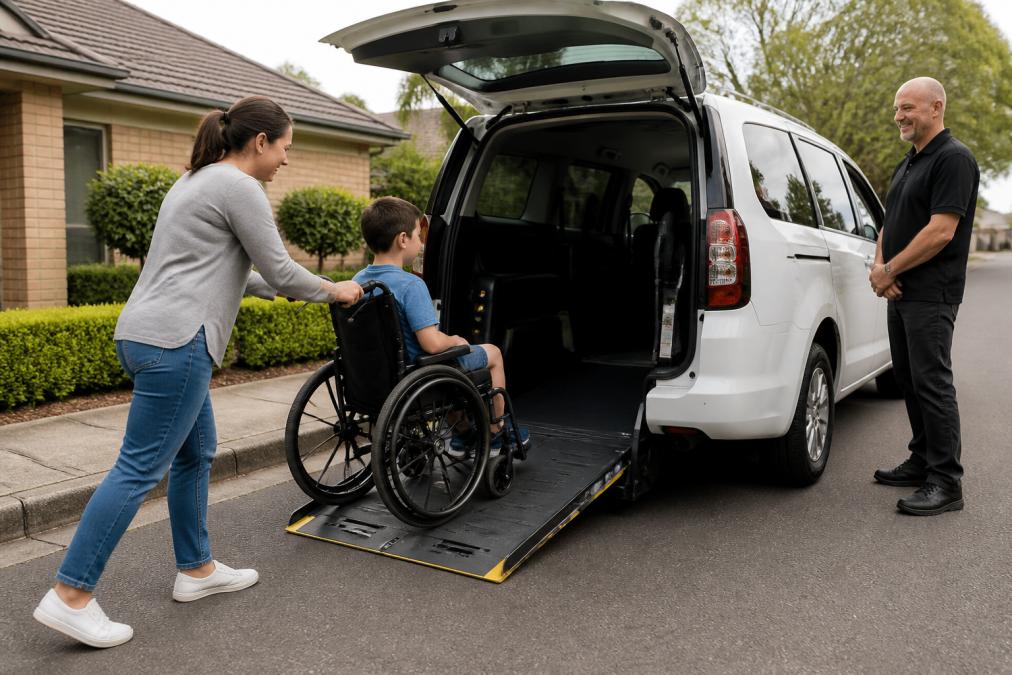
Types of Wheelchair Accessible Vehicles
The main types you will meet when booking are:
- Rear-entry vans with a fold-out ramp, the most common option
- Side-entry vans with a powered lift, useful in tight driveways
- Maxi cabs that carry a wheelchair plus several other passengers
- Sedans with a hoist for lighter, folding mobility aids
Safety Features and Restraints for Children
Child safety in a WAV comes down to three things: a four-point tie-down for the wheelchair, a correctly fitted seatbelt or harness, and a driver trained in loading. Ask the provider how they secure a smaller child, because not every vehicle carries the same restraint options. If your child uses a supportive seat or postural harness, say so when booking so the right vehicle is sent.
Multi-Purpose Taxi Program WA: Subsidised Travel Explained
The Multi-Purpose Taxi Program (MPTP) is a Western Australian subsidy that reduces the cost of taxi travel for people with a permanent disability. It is administered by the state’s transport authority, and eligible members pay a reduced fare on each trip rather than claiming money back later. For families of children with mobility difficulties, it is often the single most useful concession available, but the rules around who qualifies and how the subsidy is applied are where most parents get stuck.
Who Qualifies
Eligibility is based on permanent disability, not age. That means a child can hold their own MPTP membership card, and the subsidy applies to their travel. In practice, the criteria usually require that the person cannot use public transport without significant difficulty because of their disability. A treating doctor or specialist completes part of the application, confirming the nature and permanence of the condition.
How the Subsidy Works
MPTP is not a rebate. You do not pay full fare and claim it back. Instead, the subsidy is applied at the point of payment, the meter is adjusted, and you pay the reduced amount. This matters for budgeting because the saving is immediate and predictable.
Applying for a Child
- Download the application form from the transport authority’s website.
- Have the treating doctor or specialist complete their section, confirming the permanent disability.
- Attach a passport-style photo of the child.
- Submit the form by post or online, depending on the current process.
- Wait for the card, processing times vary, so apply well before you need it.
- Renew before expiry. Membership is not automatic, and a lapsed card means full fare.
MPTP and NDIS Together
Many families use both. MPTP reduces the fare at the meter; NDIS transport funding can cover the remaining cost if the trip is plan-related, such as travel to therapy or school. The key is to keep receipts that show the MPTP discount was applied, so the NDIS claim reflects the actual out-of-pocket amount. Claiming the full fare when you only paid the reduced amount is a common error and can trigger a plan review.
Keep a photo of your child’s MPTP card on your phone. If the physical card is lost or left at home, a provider can often still process the trip while you sort out a replacement, but only if you can show the membership number.
MPTP applies to taxi travel, not to rideshare or private hire in the same way. Confirm with your provider that they accept MPTP before you book, or you may be charged full fare.
NDIS Transport Funding for Children: A Step-by-Step Guide
NDIS transport funding helps eligible participants get to school, therapy, work, and community activities. It sits inside your child’s plan, so the amount and the rules depend on their individual funding. Some plans include a transport budget; others build transport into core supports. The key is to know which category your funding comes from before you book, because it changes what you can claim.
How to Apply and What to Include
- Check your child’s plan for a transport line item and note the budget.
- Confirm the category. Core supports and capacity building transport work differently.
- Gather trip records. Date, purpose, pickup, drop-off, and provider.
- Ask for itemised receipts that show the provider’s name and ABN.
- Submit through your plan manager or self-manage and keep copies.
- Track your balance so you are not caught short mid-plan.
For the official rules, see the NDIS transport funding guidance.
Wheelchair Accessible Taxi Booking Tips for Parents
Book earlier than you think you need to. School runs and therapy appointments cluster into the same windows, and accessible vehicles are a smaller share of any fleet. A few habits make the whole process smoother:
- Book recurring trips as a standing arrangement where possible
- Give the operator your child’s wheelchair dimensions and weight
- Confirm whether a parent or support worker will travel too
- Ask for the driver’s name and vehicle details the day before
- Keep a backup provider number saved
Child-Specific Safety Equipment: What to Ask Before You Book
Most accessible taxi content is written for adult wheelchair users. Children bring different requirements, and not every WAV is set up for them. Before you confirm a booking, ask the operator these questions:
- What restraint system do you carry for a small child? A four-point tie-down secures the wheelchair, but a smaller child may also need a postural harness or a supportive seat. Not every vehicle carries these.
- Is the seatbelt or harness adjustable for a child’s height and weight? An adult lap-and-shoulder belt may not sit correctly on a small frame.
- Can you accommodate a booster seat? If your child uses one in a standard car, ask whether the WAV has anchor points or a compatible seating position.
- Do you have sensory-friendly options? Some children find noise, lighting, or unfamiliar drivers distressing. Ask whether the same driver can be assigned to recurring trips, and whether the vehicle has a quiet cabin or dimmable lighting.
Can a Parent or Carer Travel Too?
This is one of the least-documented aspects of accessible taxi travel, and it matters enormously for parents. Policies vary by provider and by vehicle type:
- Maxi cabs typically have room for a wheelchair plus several other passengers, so a parent or support worker can usually travel in the same vehicle.
- Rear-entry vans may have limited seating once the wheelchair is secured, so confirm before booking.
- Side-entry vans often have a dedicated companion seat, but not always.
Emergency and Last-Minute Bookings
Last-minute bookings are possible but not guaranteed, especially at school pickup time. If you need a vehicle within the hour, call rather than book online so a person can check live availability. For urgent medical trips, say so upfront, and have your support worker’s number ready in case plans change.
A useful distinction for parents:
- Scheduled booking, made at least a day ahead, often for recurring school or therapy runs. This is the most reliable option and the one to use for anything routine.
- Emergency booking, made within a few hours of travel. Availability depends on what is on the road. Call, explain the urgency, and ask for the nearest accessible vehicle.
- Standing arrangement, a recurring booking for the same time each week or day. Best for school terms and regular therapy. Confirm the cancellation policy for days when your child is unwell.
Never assume a standard maxi cab can take a wheelchair. A large vehicle is not the same as an accessible one. Confirm the ramp or lift before the driver arrives, or you will lose the trip.
The two questions that save the most stress are: What child restraint do you carry? and Can I travel with my child? Ask both before you confirm any booking.
School Pickups, Therapy Runs and Recurring Trips
Recurring trips are where a good provider earns their keep. A set schedule, same driver, same time each week removes a huge amount of daily admin for parents. Ask about a standing booking for school pickups and regular therapy runs, and confirm the policy for days when your child is unwell or the appointment moves. A provider who can flex without a cancellation fee is worth keeping.
The single biggest time saver for families is a recurring booking with a consistent driver. One phone call sets up a term’s worth of school runs.
Choosing a Wheelchair Taxi Provider in Perth
Pick a provider who can answer three questions without hesitation: how many accessible vehicles they run, how they secure a child’s wheelchair, and how far ahead you need to book. At Universal Cabs, our fleet includes wheelchair accessible options alongside sedans, SUVs, and Maxi Taxis, with 24/7 availability and no price spikes between day, night, and airport trips. You can book by phone or online, and our drivers know the routes that matter for school and therapy runs.
| What to Check | Why It Matters | What to Ask |
|---|---|---|
| Accessible fleet size | Fewer vehicles means longer waits | How many WAVs run today? |
| Child restraint options | Not all vehicles fit small children | What harness do you carry? |
| Booking lead time | Recurring trips need planning | How far ahead for a standing booking? |
| Parent accompaniment | Some trips need a carer present | Can a parent travel too? |
| Funding receipts | Needed for NDIS or MPTP claims | Can you itemise the fare? |
Frequently Asked Questions
Do wheelchair-accessible taxis cost more than regular taxis?
In Western Australia, the Multi-Purpose Taxi Program (MPTP) caps the fare for eligible members at the standard taxi rate, so you are not charged extra for the accessible vehicle. Without MPTP membership, the fare may be higher depending on the provider and distance. For children, eligibility rules apply, so it is best to check the official WA Department of Transport website for current details and apply before booking.
How do I ensure a wheelchair taxi is equipped for my child’s specific wheelchair?
When booking, tell the operator your child’s wheelchair dimensions, weight, and whether they need a rear-entry or side-entry ramp. Ask if the vehicle has a four-point tie-down system and an appropriate child restraint. It also helps to confirm whether the driver is trained in wheelchair securement. If your child uses a specialised stroller or mobility aid, mention this at the time of booking so the right vehicle is sent.
Can I book a recurring wheelchair taxi for school or therapy appointments?
Yes. Many providers, including Universal Cabs, allow you to set up recurring bookings for regular trips such as school pickups or weekly therapy sessions. Provide the schedule in advance and confirm whether the same driver can be assigned for consistency. For NDIS-funded transport, check that the provider can invoice the agency directly or provide receipts for reimbursement. Always confirm lead times, especially for early morning or peak-hour slots.
What safety standards must accessible taxis meet in Western Australia?
Wheelchair accessible taxis in WA must comply with state regulations covering vehicle modifications, restraint systems, and regular inspections. Vehicles are required to have approved ramps or lifts, secure tie-down points, and seatbelts for all passengers. Drivers should be trained in safe wheelchair securement. For specific standards, refer to the WA Department of Transport. When booking, ask the provider about their vehicle maintenance and driver training.
Booking accessible transport for a child with a disability takes planning, patience, and a provider who understands both. Universal Cabs offers a diverse fleet with wheelchair accessible vehicles, 24/7 availability, consistent pricing with no hidden spikes, and booking by phone or online. Get started with Universal Cabs and set up a school run or therapy trip that simply works.