

Table of Contents
- How Prebooked Taxis Reduce Risk
- Driver Vetting and Police Clearances
- Real-Time GPS Tracking and Accountability
- Reliable Airport Taxi Transfers with Flight Tracking
- Taxi Safety Regulations in Western Australia
- Avoiding Illegal Operators and Unlicensed Services
- Booking Confirmation and Payment Security
- Conclusion
Last Updated: August 28, 2026
How Prebooked Taxis Reduce Risk
Prebooked taxis are safer than hail-on-the-street alternatives because they establish accountability before the journey begins. When you book in advance, your trip is logged in a system, your driver is identified, and your destination is recorded. This creates a clear audit trail that protects both passenger and driver.
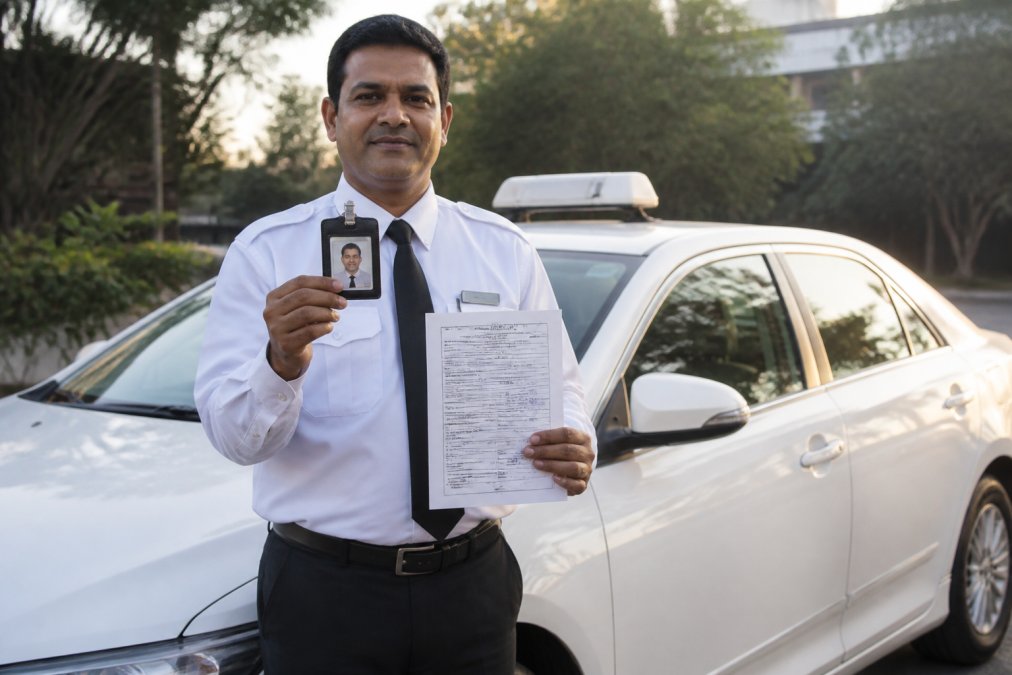
A prebooked service connects you to a specific, vetted operator rather than leaving you to flag down an unknown vehicle. You know who’s picking you up, which company they work for, and how to reach them if something goes wrong. At Universal Cabs, the moment you confirm your ride, you’re a customer with a confirmed appointment and direct contact with a licensed operator, not a stranger getting into a random car.
Prebooked taxis also give operators time to prepare. They can assign the most suitable vehicle for your needs, ensure the driver is properly briefed, and confirm the route in advance. Operators can track their fleet in real time, monitor driver behaviour, and respond quickly if a passenger raises concerns, oversight that would be impossible with informal street hails.
Prebooked taxis create accountability through documentation, identification, and operator oversight, three safeguards that street hails cannot match.
Driver Vetting and Police Clearances
Licensed taxi operators in Western Australia are required to conduct background checks on their drivers as part of their duty of care (transport.wa.gov.au). These checks typically include criminal history screening and verification that drivers do not pose a risk to the public.

When you book with a licensed operator, you’re using a service that has already verified its drivers meet baseline safety standards. The operator has a legal obligation to maintain these records and remove drivers who no longer meet requirements. Street hails offer no such assurance.
Vetting goes beyond criminal checks. Licensed operators assess driver reliability, customer service capability, and vehicle maintenance standards. Drivers are trained on passenger safety protocols, emergency procedures, and professional conduct. Universal Cabs maintains strict driver standards across its fleet, with thorough screening, ongoing training, and regular performance reviews.
Unlicensed drivers operating informally have no obligation to undergo background checks. Accepting a ride from an unverified operator puts you at risk of harm with no recourse or accountability.
Real-Time GPS Tracking and Accountability
GPS tracking transforms a taxi journey from an isolated event into a monitored trip. When your driver’s location is tracked in real time by the operator’s dispatch system, the operator knows where every vehicle is at every moment and can immediately locate the vehicle and intervene if a passenger reports a problem.
GPS tracking creates a digital record of the route taken, preventing drivers from taking unnecessarily long routes and giving passengers evidence if something goes wrong. Many modern taxi apps and dispatch systems also include emergency alert features that allow passengers to flag a trip as unsafe, immediately notifying the operator and, in some cases, local authorities.
Drivers know their movements are monitored, which encourages professional behaviour and discourages risky conduct. Passengers know they’re not alone, an operator is watching the journey and can respond if needed.
When you book a prebooked taxi, ask the operator about their GPS tracking and emergency alert features. Knowing these tools are active gives you genuine peace of mind during the journey.
Reliable Airport Taxi Transfers with Flight Tracking
Airport transfers represent a critical use case where prebooked services demonstrate their safety advantage most clearly. Travellers arriving at the airport are often unfamiliar with the area, potentially exhausted, and carrying valuables, making them vulnerable to overcharging, unsafe vehicles, and unlicensed operators.
A reliable airport taxi transfer begins before you land. When you book in advance with a licensed operator, they can access flight information to track your arrival time, so your driver knows when to expect you. Flight-tracking technology allows operators to adjust pickup timing automatically if your flight is delayed, eliminating confusion and the need to renegotiate with a driver you’ve just met.
You exit the terminal knowing exactly which vehicle to look for, where to meet your driver, and how to contact them if you can’t find them. Universal Cabs offers flight-tracking for all airport transfers, ensuring your driver knows your actual arrival time and can adjust for delays.
Taxi Safety Regulations in Western Australia
Taxi services in Western Australia are regulated by the Department of Transport. Licensed operators must comply with safety standards, driver vetting requirements, and vehicle maintenance protocols. These regulations exist specifically to protect passengers.
Licensed operators are required to hold public liability insurance, which covers passengers in the event of an accident or incident (transport.wa.gov.au). Operators must also maintain vehicle safety standards through regular inspections to ensure mechanical soundness and working safety features. The regulatory framework requires operators to maintain complaints procedures and record-keeping systems, so passengers can lodge formal complaints with the operator and, if necessary, escalate to the transport regulator.
When you book with a licensed operator, you’re using a service that has been approved by the regulator and is subject to ongoing compliance requirements.
Regulatory compliance means your taxi operator is legally required to maintain safety standards, carry insurance, vet drivers, and respond to complaints. Unlicensed services have none of these obligations.
Avoiding Illegal Operators and Unlicensed Services
The safest way to avoid illegal operators is to book with a licensed service in advance. This removes the temptation to accept an informal offer or hail an unknown vehicle when you’re tired, unfamiliar with the area, or under time pressure.
How to verify a taxi operator is legitimate. Before you book, take two minutes to confirm the operator is licensed and registered. The Department of Transport in Western Australia maintains a public register of licensed taxi operators and their vehicles. You can verify a service’s legitimacy by:
-
Check the operator’s licence status. Visit the Department of Transport website and search for the operator’s name or licence number. Licensed operators are required to display their licence number on their website, booking app, and vehicle signage. If you cannot find the licence number or the operator does not appear in the register, do not use their service.
-
Verify vehicle registration. Licensed taxis display their licence plate and vehicle registration clearly. The registration should match the vehicle that arrives to pick you up. If the vehicle shown on the booking app does not match the vehicle that arrives, cancel the ride.
-
Check for insurance and public liability. Licensed operators are required to hold public liability insurance. Legitimate operators will provide proof of insurance on request.
-
Look for professional branding and contact details. Licensed operators display their company name, phone number, and licence information on their vehicles and booking platforms. Their website should have a physical business address, a phone number you can call, and clear terms of service.
Red flags for unlicensed services. Be wary of operators who approach you at transport hubs offering rides, services operating only through informal messaging apps with no official booking platform, drivers who cannot produce identification, requests for cash payment only with no receipt, fares quoted verbally with no written confirmation, vehicles with no visible company branding, pressure to book immediately, and operators offering significantly lower fares than licensed services.
Why unlicensed operators are risky. Illegal taxi operators operate outside regulatory oversight: drivers have not undergone police clearance, vehicles are not subject to safety inspections, there is no insurance covering passengers, no complaints process exists, payment is unrecorded, and the operator can disappear without warning.
The airport scenario. Arriving travellers are particularly vulnerable to unlicensed operators. Unofficial touts at airport exits often direct passengers to informal taxi services, claiming they offer better rates. These operators are not licensed, their drivers are not vetted, and their vehicles are not insured. Prebooked services eliminate this risk entirely, your driver is waiting with a confirmation, you know the fare in advance, and you’re using a licensed, insured operator.
Before booking any taxi service, spend 60 seconds verifying the operator is licensed through the Department of Transport register. This single step eliminates the vast majority of safety risks associated with unlicensed operators.
Booking Confirmation and Payment Security
A booking confirmation is more than a convenience, it’s a safety record and a financial protection mechanism. When you receive a confirmation, you have documented proof of your journey, the operator you booked with, the driver assignment, the expected fare, and a payment receipt.
Digital payment through a licensed operator’s system is significantly safer than cash transactions with an unknown driver. Licensed taxi operators must comply with the Payment Card Industry Data Security Standard (PCI DSS) if they accept card payments, meaning your card details are encrypted during transmission and not stored on the driver’s device. Licensed operators publish their fare structure before you book, so you see the base fare, any surcharges, and the estimated total before confirming. Once you pay digitally, a receipt is automatically generated showing exactly what you paid.
A common tactic of unlicensed operators is to claim the fare is higher than agreed and demand additional cash at the end of the journey. Licensed operators with fixed digital pricing eliminate this scenario entirely, your fare is locked in when you book, and payment is processed automatically.
If a licensed operator charges you incorrectly, you can dispute the charge through your bank or card issuer. Most banks offer chargeback protection for unauthorised or fraudulent transactions. Licensed operators are subject to privacy legislation, including the Privacy Act 1988 (Cth), which governs how they collect, use, and store your personal and payment information (legislation.gov.au). Many modern taxi booking apps send you a digital receipt immediately after payment, along with the driver’s name, vehicle details, and route taken, creating an auditable trail.
Before booking, check that the operator’s website displays security badges (such as SSL certificates, indicated by a padlock icon in your browser) and clearly states they comply with PCI DSS standards. Legitimate operators are transparent about their payment security.
If a taxi operator asks you to pay via bank transfer, cryptocurrency, or wire transfer before the journey, or demands cash-only payment with no receipt, these are red flags for an unlicensed or fraudulent service. Licensed operators accept card payments and provide digital receipts.
Frequently Asked Questions
Q: Is it better to book a taxi in advance for airport transfers?
A: Yes. Advance booking for airport transfers eliminates uncertainty about driver availability and allows services to use flight-tracking technology to monitor delays. You receive a confirmed booking with driver details, vehicle information, and real-time location updates. This differs from on-demand hailing, where availability depends on current demand and drivers may not know your flight status. Pre-booking also lets you choose vehicle type (sedan, SUV, wheelchair-accessible) and ensures a professional, vetted driver is assigned to your trip.
Q: How does prebooking a taxi improve passenger safety?
A: Prebooked taxis improve safety through multiple layers: drivers undergo police clearance checks and background verification before assignment, vehicles are inspected regularly for mechanical safety and cleanliness, booking confirmation creates an accountability record, and GPS tracking allows real-time monitoring of your journey. You know the driver's name and vehicle details before pickup, and your trip is logged in the service's system. This contrasts with flagging an unlicensed vehicle, where you have no verification of the driver, no trip record, and no recourse if something goes wrong.
Q: What regulations govern taxi safety in Western Australia?
A: Taxi services in Western Australia are regulated by the Department of Transport. Licensed operators must comply with safety standards including driver background checks, vehicle safety inspections, and passenger protection requirements. Drivers must hold a valid taxi driver's licence and pass police clearance. Passengers should verify a service is licensed by checking the Department of Transport's register of approved operators. Licensed services provide accountability, insurance coverage, and compliance with safety audits that illegal operators do not.
Q: How can I tell if a taxi service is legitimate and not an illegal operator?
A: Verify legitimacy by booking through an established, licensed operator with an online booking system, phone number, and company registration. Licensed services display their operator licence number and vehicle registration clearly. Check the Department of Transport's register to confirm the operator is approved. Avoid unmarked vehicles, drivers who quote cash-only fares with no receipt, or services with no booking confirmation system. Legitimate operators provide booking confirmation, driver identification, transparent pricing, and trip records, all absent from illegal operators.
This article was written using GrandRanker