

Table of Contents
- How to Book a Wheelchair Accessible Taxi for Your Event
- Maxi Taxi Wheelchair Access Capacity: How Many Passengers Fit
- Accessible Transport for Weddings and Events: Planning the Logistics
- The WA Taxi User Subsidy Scheme Explained
- What Affects the Cost of Accessible Event Transport
- Safety, Training and On-Board Equipment to Check
- Conclusion
- Frequently Asked Questions
Last Updated: September 17, 2026
How to Book a Wheelchair Accessible Taxi for Your Event
Booking a wheelchair taxi for special events starts with one call to a 24/7 operator and a short list of details ready to go. At Universal Cabs, the jobs that run smoothly are almost always the ones where the organiser called ahead with the right information.
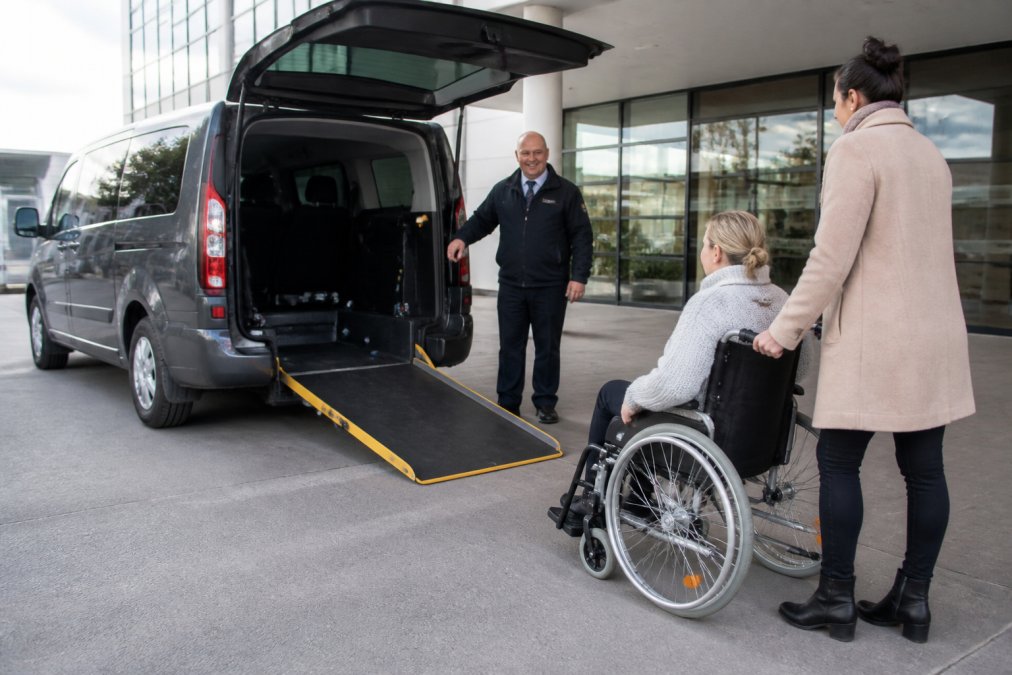
A wheelchair accessible taxi is fitted with a ramp or hydraulic lift and restraint systems that carry a passenger safely while seated in their own wheelchair, so the booking conversation differs from a standard cab fare.
What to Have Ready When You Call
The biggest mistake organisers make is calling with just a time and a suburb. Have this ready before you dial:
- Pickup address and the exact entrance, not just the street
- Drop-off address with a note on venue access
- Date, pickup time, and expected finish time
- Number of passengers, including how many travel in wheelchairs
- Wheelchair type and dimensions, since not every chair fits every vehicle
- Whether a carer or companion is travelling too
- A mobile number the driver can reach on the day
Booking Lead Time for Group and Event Travel
For a single accessible cab, a few hours’ notice usually works outside peak periods. For group and event travel, aim for at least 48 hours, and a week or more for weddings, conferences, and large functions needing several vehicles at once.
Leaving an accessible booking to the same day is the most common mistake we see. Wheelchair-accessible vehicles are a smaller part of any fleet, and weekend evenings and event season fill up first. A late request can mean no vehicle at all, not just a longer wait.
Maxi Taxi Wheelchair Access Capacity: How Many Passengers Fit
A maxi taxi typically carries one or two passengers seated in wheelchairs alongside several seated passengers, depending on the vehicle and chair size. Confirm exact capacity at booking rather than assuming.
| Traveller mix | Typical vehicle | What to confirm |
|---|---|---|
| 1 wheelchair user + 1 carer | Wheelchair accessible sedan or wagon | Ramp or lift, restraint type |
| 2 wheelchair users + small group | Wheelchair accessible maxi taxi | Chair dimensions, remaining seat count |
| Large group, no wheelchair users | Standard maxi taxi | Luggage space, pickup point |
| Mixed group with mobility aids | Wheelchair accessible maxi taxi | Walker or frame storage, door-to-door access |
Accessible Transport for Weddings and Events: Planning the Logistics
Accessible transport for weddings and events works best planned into the run sheet, not bolted on the week before. The timing has to fit the ceremony, photos, and reception, and someone needs to own it.
Verifying the Vehicle Before and On the Day
Confirm on the day that the assigned vehicle has the ramp or lift you booked and that the driver knows which entrance to use. A quick call the morning of the event prevents a standard cab arriving that the passenger can’t board.
When you call to confirm, ask three specific questions:
- Does the assigned vehicle have a ramp or a lift, and which one did I book?
- Has the equipment been checked today, and is it working?
- Does the driver have the venue entrance and the organiser’s mobile number?
What to Do If Equipment Fails on the Day
Equipment failures happen, so plan for them. A ramp that won’t deploy, a lift that won’t lower, or a restraint that won’t lock leaves a passenger stranded at the kerb. The response is a sequence, not a scramble:
- Call the operator’s dispatch line immediately and state that the assigned vehicle is not usable for a wheelchair passenger
- Ask for a replacement accessible vehicle and an estimated arrival time
- If no replacement is available, ask the operator to arrange a second accessible vehicle from another provider, or to escalate to their on-call manager
- Tell the venue staff, so they can hold the schedule and keep the passenger comfortable indoors
- Note the time of the failure and the operator’s response, in case the cost of the trip needs to be adjusted
A Checklist for Event Organizers
Use this as a working checklist when you’re coordinating accessible transport:
- Count every guest who needs accessible transport, and note their wheelchair or mobility aid type
- Confirm venue entrances, loading zones, and drop-off points at both ends
- Book accessible vehicles at least 48 hours ahead, longer for large events
- Match vehicle capacity to the actual group, not an estimate
- Give the operator a run sheet with pickup times and a contact number
- Arrange a backup contact if the organiser will be unavailable during the event
- Confirm the assigned vehicle, driver, and equipment on the morning of the event
- Brief venue staff on where accessible vehicles will arrive
- Build a 45-to-60-minute buffer before the ceremony or main event
- Have the operator’s dispatch number saved and a fallback plan if equipment fails
Ask the operator to note the venue entrance on the booking, not just the address. At large venues, the difference between the main entrance and the accessible drop-off point can be several hundred metres of travel for a guest in a wheelchair.
The WA Taxi User Subsidy Scheme Explained
The WA Taxi User Subsidy Scheme helps eligible passengers with disability-related transport needs cover part of the cost of taxi travel. It is administered through the state government, and eligibility, registration, and subsidy amounts are set by the scheme, not individual operators.
What Affects the Cost of Accessible Event Transport
Fare estimation for accessible event transport depends on distance, time, vehicle type, and trip structure. Any operator quoting one number before knowing the details is guessing. Understand how the fare is built, then ask for a quote against your actual itinerary.
The variables that move the cost most:
- Distance and route: longer trips and routes with heavy traffic cost more, and event precinct road closures can add detours
- Vehicle type: a maxi taxi or accessible vehicle is priced differently from a standard sedan, and a vehicle with a lift may be priced above one with a ramp
- Waiting time: if the vehicle holds at the venue, that time is part of the fare, and it is the single most common surprise on an event invoice
- Multiple pickups: a run with several stops takes longer than a single point-to-point trip, and each stop adds both travel and boarding time
- Time of day: confirm the operator’s rate structure, since some services vary rates and others hold them steady
- Crew and setup: a driver who has to secure a wheelchair, lower a ramp, and assist a passenger needs more time at each end than a standard pickup
How to Get a Firm Quote for an Event
A quote is only firm if the operator has the full picture. Give them this and ask for a written figure:
- The run sheet, every pickup and drop-off, in order, with times
- How many passengers travel in wheelchairs, and their chair dimensions
- How many seated passengers and carers travel with them
- Whether the vehicle waits on site, and for how long
- Whether there is a return leg, and at what time
- Any venue access notes, gate codes, loading zones, accessible entrances
A fare that excludes waiting time or a second pickup looks lower until the final invoice arrives. Ask what’s included, not just what it costs.
Safety, Training and On-Board Equipment to Check
Passenger safety in an accessible vehicle comes down to three things: a trained driver, working equipment, and correct restraints. Ask about all three before you book, especially when you’re responsible for other people’s guests.
On-board equipment to confirm:
- A ramp or hydraulic lift that suits the passenger’s wheelchair
- Wheelchair restraint systems that secure the chair to the vehicle floor
- A separate seatbelt or occupant restraint for the passenger
- Adequate lighting at the entry point for evening pickups
Conclusion
Coordinating accessible transport for an event is a logistics problem, not a booking problem. Organisers who get it right count guests accurately, book early, confirm the vehicle on the day, and treat transport as part of the run sheet.
Frequently Asked Questions
How far in advance should I book a wheelchair taxi for an event?
For a single passenger, booking a day or two ahead is usually enough. For events with several wheelchair users, or for weddings and conferences where timing is fixed, book at least a week ahead and confirm the number of vehicles. Give the operator your pickup windows, venue addresses and passenger count so they can allocate the right accessible vehicles. If your plans change, call to update the booking rather than assuming the original time still holds.
Do wheelchair taxis cost more than a standard taxi?
In many cases the fare is calculated the same way as a standard taxi, based on distance and time, so travelling in an accessible vehicle does not automatically cost extra. What does affect the total is the number of vehicles needed, the distance between venues, and whether you book a maxi taxi for a group. Ask for a fare estimate when you book so you can budget, and check whether any subsidy applies to your trip.
Are there government subsidies available for wheelchair-accessible transport in Western Australia?
The WA Taxi User Subsidy Scheme helps eligible passengers with the cost of taxi travel, including accessible vehicles. Eligibility is assessed against set criteria, so the exact rules and any current figures should be checked with the scheme’s official source rather than assumed. If you think you qualify, apply before your event so your subsidy is active on the day. Ask your operator whether they process subsidised fares.
How many passengers can a maxi taxi wheelchair access vehicle carry?
Capacity depends on the vehicle and how many wheelchairs are on board. A maxi taxi typically seats a larger group than a sedan, but each wheelchair position takes up space that would otherwise hold seated passengers, so the mix matters. Tell the operator how many wheelchair users and how many ambulatory passengers are travelling, plus any luggage or mobility aids, and they can confirm which vehicle configuration fits your group.