

Table of Contents
- Why Pre-Booked Taxi Services for Medical Appointments Beat On-Demand Rides
- Step 1: Gather What You Need Before You Book
- Step 2: How to Schedule a Taxi for Medical Appointments
- Step 3: Wheelchair Accessible Taxi Booking Explained
- Step 4: Using the Taxi Transport Subsidy Scheme WA for Eligible Trips
- Step 5: Managing Recurring Appointments and Return Trips
- Common Mistakes to Avoid When Booking a Medical Appointment Taxi
- Frequently Asked Questions
Last Updated: September 16, 2026
Why Pre-Booked Taxi Services for Medical Appointments Beat On-Demand Rides
If you have ever stood on a kerb at 7am watching a countdown timer reset for the third time, you already know how to schedule a taxi for medical appointments beats on-demand rides. A confirmed booking assigns a specific vehicle to a specific time; an on-demand request just puts you in a queue everyone else is in.
Book the return trip at the same time as the outbound one. Most transport failures happen on the way home, not on the way there.
Step 1: Gather What You Need Before You Book
The fastest bookings come from people with their details ready. Before you call or open a booking form, collect five things:
- The full street address of the clinic, including building or suite number
- The appointment time, plus how early the clinic wants you to arrive
- Your mobility needs, such as a walking frame, a wheelchair, or a carer travelling with you
- A contact mobile number the driver can reach on the day
- Your return time, or an estimate if the appointment length is uncertain
Step 2: How to Schedule a Taxi for Medical Appointments
To schedule a taxi for medical appointments, book a specific pickup time and address in advance, confirm the vehicle type and fare basis, and keep the booking reference. Advance reservation is what separates a planned medical trip from a hopeful one.
Booking Online vs Over the Phone
Online booking suits routine trips you can plan days ahead: enter the address, choose a time, and get written confirmation. Phone booking suits anything unusual, a wheelchair-accessible vehicle, a carer travelling with you, or a same-week change, because you can explain the situation in one go.
| Confirm this | Why it matters |
|---|---|
| Pickup time and address | Prevents the early-arrival problem at clinics |
| Vehicle type | Ensures space for a wheelchair, frame, or carer |
| Fare basis | Gives you a fixed figure to plan around |
| Booking reference | Speeds up any change or follow-up |
Give the clinic’s main entrance, not the car park. Medical centres often have several access points, and the wrong one adds a five-minute walk you may not be able to manage.
How Far in Advance Should You Book?
For a standard appointment, booking the day before is a sensible baseline. For early-morning slots, weekend appointments, or any trip needing a wheelchair-accessible vehicle, book several days ahead. Medical transport demand clusters: clinic hours start early, and the 7am to 9am window fills first.
Step 3: Wheelchair Accessible Taxi Booking Explained
Wheelchair accessible taxi booking means requesting a vehicle fitted with a ramp or hoist and secure tie-down points, rather than a standard sedan. It must be specified at the time of booking, because accessible vehicles are a smaller part of any fleet.
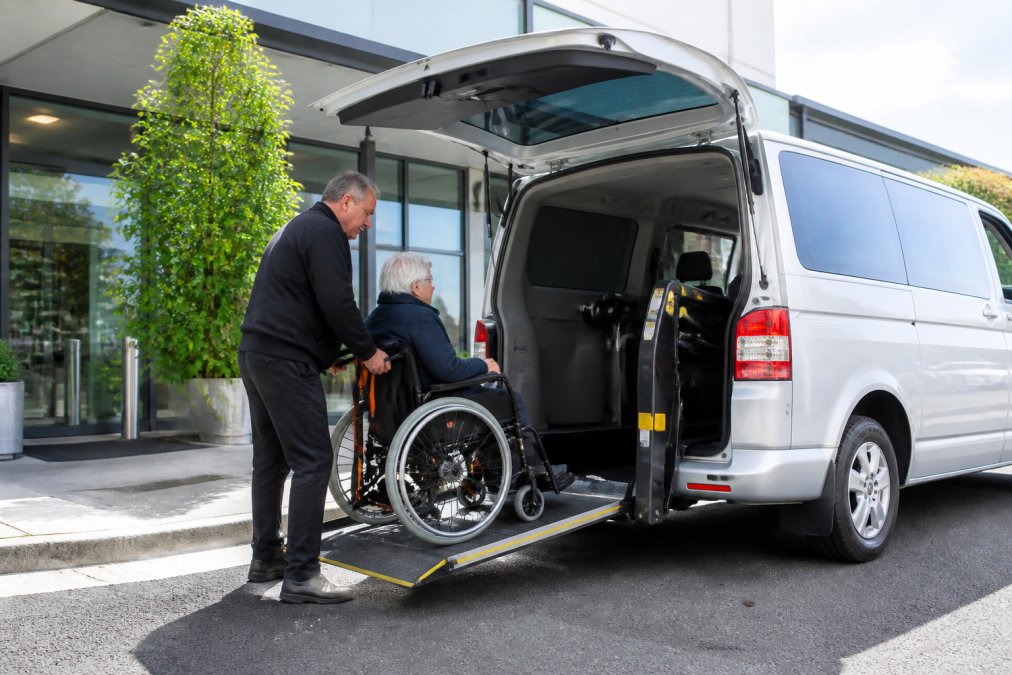
Never book a standard sedan and mention the wheelchair at pickup. The driver may not have tie-down equipment, and you will be left waiting for a second vehicle.
Step 4: Using the Taxi Transport Subsidy Scheme WA for Eligible Trips
The Taxi Transport Subsidy Scheme WA is a State Government scheme that helps eligible people with permanent disabilities with the cost of taxi travel. It is administered through the Department of Transport, and eligibility is assessed individually rather than automatically. Two points matter for planning: you must be approved before you travel, not after, and not every trip qualifies, so check the rules before you rely on the subsidy for a regular appointment run.
What the Scheme Typically Covers
In broad terms, the scheme is built around permanent disability rather than age or a specific diagnosis. Applicants generally need supporting documentation from a medical practitioner confirming the nature of the disability and how it affects their ability to use public transport. Because the criteria are reviewed periodically, treat any summary, including this one, as a starting point and confirm the current rules directly.
How to Apply Before You Book
- Check your eligibility against the current criteria on the Department of Transport page.
- Obtain the supporting form, usually a medical certificate or assessment completed by your treating practitioner.
- Lodge the application and wait for written approval. Do not book a subsidised trip on the assumption it will be approved.
- Keep your approval reference and quote it when booking, so the operator can apply the discount correctly.
Approval is not instant, a wait of days to a few weeks is common depending on how quickly the medical documentation is completed, so start well before your first subsidised appointment.
Using the Subsidy on the Day
Do not assume a trip is covered because the appointment is medical. The scheme is tied to the passenger’s eligibility, not the purpose of the trip, and some trip types may be excluded. Check before you rely on it.
Because the subsidy amount and eligibility criteria are set by the scheme and can change, confirm the current details directly with the WA Department of Transport’s Taxi Transport Subsidy Scheme page rather than relying on second-hand information.
A Unique Angle: Pairing the Subsidy with a Standing Booking
Most guides stop at eligibility. The practical win is combining an approved subsidy with a recurring booking. Once your approval is in place, set up a standing arrangement for your regular appointment slot and flag the subsidy on the account. That way the discount is applied automatically each trip, and you are not re-explaining your situation every week.
Step 5: Managing Recurring Appointments and Return Trips
Recurring bookings are where planning pays off. If you attend the same clinic weekly or fortnightly, set up a standing arrangement rather than rebooking each time. It removes a task from your week and locks in your slot before the peak window fills.
Building a Standing Arrangement That Actually Works
A standing booking is more than a repeating calendar entry. Confirm four things:
- The pickup window, not just a single time. A 15-minute window absorbs minor delays without a panicked call.
- The vehicle type, so an accessible vehicle is reserved for every trip rather than requested ad hoc.
- The fare basis, so you can budget across a month rather than guessing each week.
- The subsidy flag, if you are approved, so the discount applies automatically.
Return Trips: Three Approaches, Not Two
Most advice covers fixed return times and call-when-finished. There is a third that suits many patients better:
- Fixed return time. Book a set pickup if your appointment length is predictable, such as a standard consultation or a scheduled treatment.
- Call-when-finished. Keep the operator’s number handy and request the return once you know your finish time. This suits appointments that regularly run over.
- Rolling window. Book a return pickup with a generous window, say, a 30-minute range, and ask the driver to wait or return within it. This suits treatments with a predictable but variable finish, such as dialysis, where you may be done anywhere within a half-hour band.
Itinerary Planning for Multi-Stop Days
A blood test followed by a specialist across town is a single trip with two stops, not two separate bookings. Give the operator the full itinerary at booking: each address, the expected time at each stop, and whether the driver should wait or return. Waiting time is usually charged, so ask for the rate before you commit, it is often cheaper to release the vehicle and book a second pickup than to pay a driver to wait an hour.
Contingency Planning for the Day
Even a well-planned trip can go wrong, a vehicle breakdown, a traffic incident, or a clinic running late. Three habits reduce the damage:
- Keep the operator’s number saved and call as soon as you know a pickup time has slipped.
- Have a backup contact, a family member or friend who can step in if a replacement vehicle cannot reach you quickly.
- Build a buffer into the return trip, especially if you have another commitment later in the day.
Keep a simple record of every booking: date, time, reference number, vehicle type, and whether the subsidy applied. If something goes wrong, that record is what gets it fixed quickly, and it makes any subsidy query straightforward to resolve.
Common Mistakes to Avoid When Booking a Medical Appointment Taxi
Most medical transport problems trace back to a handful of avoidable errors:
- Booking to the appointment time, not the arrival time. You end up late for check-in.
- Leaving the return trip unbooked. You finish treatment and have no way home.
- Omitting mobility needs. The vehicle arrives without a ramp or tie-downs.
- Not confirming the fare basis. You cannot budget for a figure you were never given.
- Booking too late for peak slots. Early-morning and weekend trips need more notice.
- Forgetting the booking reference. Changes take longer without it.
Frequently Asked Questions
How far in advance should I book a taxi for a medical appointment?
For routine appointments, booking at least 24 to 48 hours ahead gives you the best choice of times and vehicle types. For wheelchair accessible vehicles or early morning slots, aim for several days ahead where possible. If your appointment is urgent, call the provider directly rather than relying on an online form, since same-day availability depends on fleet capacity at the time. Pre-booking also locks in a fixed price quote, so you know the fare before you travel.
Can I pre-book a taxi for a recurring medical appointment?
Yes. Many providers, including Universal Cabs, let you set up a recurring booking so the same time slot is reserved each week or fortnight. Provide the full schedule upfront, including treatment dates and expected finish times, and confirm whether the return trip is flexible. If your appointment length varies, ask for a standby arrangement where the driver waits or returns at a set time. This removes the need to rebook every visit.
What information do I need to provide when booking a medical appointment taxi?
Have the pickup address, destination, appointment time, and expected duration ready. Mention any mobility needs, such as a wheelchair, walking frame, or assistance getting in and out of the vehicle. If you hold a Taxi Transport Subsidy Scheme WA voucher, note this at booking so the driver can process it. Include a mobile number for day-of contact and specify whether you need a return trip or a driver to wait.
Are there specific taxi services for patients with mobility needs?
Yes. Wheelchair accessible taxis are fitted with ramps or lifts and restraint systems, and drivers are trained to assist passengers safely. When booking, state your requirements clearly so the right vehicle is dispatched. Universal Cabs operates wheelchair accessible vehicles across its fleet and can also accommodate walking frames and mobility aids in sedans or Maxi Taxis. Confirm accessibility at the time of booking rather than assuming any taxi can take a wheelchair.