

Table of Contents
- What Makes a Wheelchair Taxi the Best Choice for Seniors in Perth
- Multi-Purpose Taxi Program WA: How Seniors Can Save on Fares
- Wheelchair Accessible Taxi Booking: Methods Compared
- Airport Transfer for Wheelchair Users: What to Expect
- Top Wheelchair Taxi Services in Perth: Pros, Cons, and Pricing
- Emergency vs Non-Emergency Transport: When to Book Which
- Common Mistakes Seniors Make When Booking Wheelchair Taxis
- Conclusion: Choosing the Right Wheelchair Taxi for Your Needs
- Frequently Asked Questions
Last Updated: September 26, 2026
What Makes a Wheelchair Taxi the Best Choice for Seniors in Perth
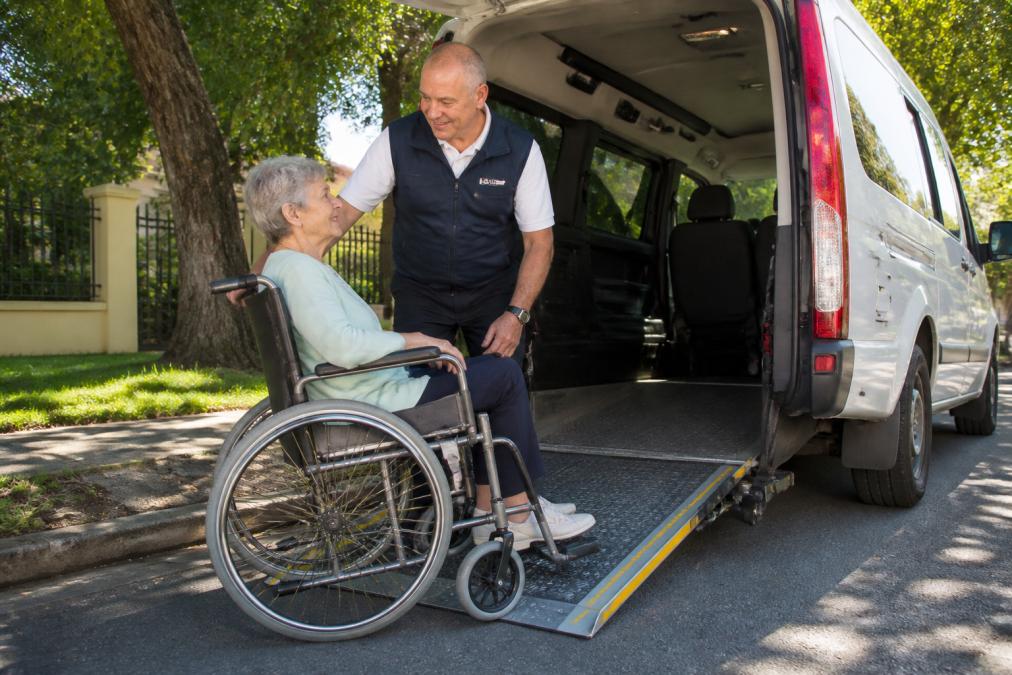
A wheelchair accessible taxi has a ramp or hydraulic lift, secure tie-down points, and a trained driver who assists passengers with mobility needs door to door. For seniors, the best wheelchair taxi Perth offers combines that equipment with patient drivers and a booking process that does not leave you waiting.
Key Features to Look For in an Accessible Vehicle
Check three things before you book: how you board, how you are secured, and how much room you have inside.
- Ramp or hydraulic lift access. A ramp suits most manual and powered wheelchairs; a hydraulic lift helps where the chair is heavy or the passenger cannot manage a slope.
- Four-point tie-down straps. Your chair should be anchored to the floor, not held by the driver. Ask directly.
- Spacious interior and vehicle capacity. A proper maxi cab layout gives you room to transfer and carries a companion or carer alongside you.
- Vehicle safety standards. Accessible vehicles meet the same registration and inspection requirements as any taxi, so ask whether the fleet is fully compliant.
Ask the booking agent two questions before you confirm: “Does the vehicle have a ramp or a lift?” and “Are there four tie-down points?” Operators who answer immediately know their fleet. Hesitation is a red flag.
Driver Training and Passenger Care Standards
Passenger care is where accessible transport is won or lost. Drivers assisting seniors should be trained in safe wheelchair handling, correct tie-down technique, and respectful communication.
Multi-Purpose Taxi Program WA: How Seniors Can Save on Fares
The Multi-Purpose Taxi Program (MPTP) is a State Government scheme that subsidises taxi travel for people who cannot use public transport because of a disability or significant mobility restriction. It is the biggest cost saver for seniors who rely on accessible taxis.
Multi-Purpose Taxi Program (MPTP)
How the Subsidy Actually Works at the Meter
When you join the MPTP you are issued a membership card. On an eligible trip you present it to the driver, and the subsidy is deducted from the metered fare before you pay, no reimbursement, no claim. Forgetting the card means paying full fare even though you are a member.
Two practical consequences follow:
- The card is the benefit. There is no digital fallback for most members. Keep it with your concession card so it travels with you.
- The driver must be able to process it. If the operator’s drivers are not set up for MPTP, you may pay in full and chase a refund. Confirm at booking that the driver accepts the card.
Eligibility and Application Steps
Eligibility turns on your ability to use public transport, not your age. If a disability or mobility impairment makes standard buses and trains impractical, you may qualify.
- Confirm you meet the eligibility criteria on the official program page.
- Download and complete the MPTP application form.
- Have your medical practitioner complete the section confirming your mobility restriction.
- Submit the form with the required supporting documents.
- Wait for your membership card, then present it when paying your fare.
Which Trips Qualify, and Which Do Not
The MPTP is designed for travel that substitutes for public transport: medical appointments, dialysis and other recurring treatment, shopping, social outings, and trips to transport hubs.
Do not assume your existing concession card covers taxi fares. The MPTP is a separate scheme with its own application and membership card. Seniors who skip this step pay full fare on every trip, which adds up quickly across regular medical appointments.
If you travel to appointments more than once a fortnight, the MPTP is almost certainly worth the paperwork. Work out roughly what you spend on taxi fares in a month, then compare that with the subsidised rate once you have your card. For most regular users the card pays for itself within the first few trips.
Wheelchair Accessible Taxi Booking: Methods Compared
Three booking methods dominate: phone, online form, and app. The right choice depends on how far ahead you plan, your comfort with technology, and how specific your equipment needs are.
| Booking Method | Best For | Booking Lead Time | Confirmation |
|---|---|---|---|
| Phone call | Urgent trips, first-time users, complex equipment needs | Same day to a few hours | Verbal, plus SMS in most cases |
| Online form | Planned appointments, non-urgent travel | Usually 24 hours ahead | Email or SMS |
| Mobile app | Repeat users comfortable with apps | Minutes to hours | In-app, with driver tracking |
Phone vs Online vs App: Which Works Best for Seniors?
Phone booking remains the most reliable option for seniors with specific equipment needs. Speaking to a person lets you confirm the vehicle type, explain your wheelchair dimensions, and request a driver experienced with mobility assistance.
What to Tell the Dispatcher Before You Book
This step determines whether the right vehicle turns up. Have these details ready before you book:
- Wheelchair type. Manual or powered. Powered chairs are heavier and may require a hydraulic lift rather than a ramp, so say which you use.
- Chair dimensions and weight. Approximate width and total weight including the passenger, so the operator can confirm lift or ramp capacity and tie-down rating.
- Whether you can transfer. If you can move into a standard seat, more vehicles are available. If you must remain in your chair, say so, it changes which vehicle is dispatched.
- Companion or carer. State whether anyone will travel with you, so a maxi cab rather than a sedan is sent.
- Boarding preference. Ramp or lift. If you cannot manage a slope, ask for a lift-equipped vehicle specifically.
Booking for Medical Appointments
Medical appointments are the most common reason seniors book accessible taxis. Two things matter most: arriving on time, and having a vehicle for the return journey.
For recurring appointments, dialysis, physiotherapy, regular specialist visits, ask the operator whether they can set up a standing booking. It removes the need to re-book each time and gives you the same driver where possible, which matters for passengers who find unfamiliar assistance stressful.
Airport Transfer for Wheelchair Users: What to Expect
An airport transfer for wheelchair users follows the same pattern as any accessible trip, plus baggage handling and timing around your flight. Book ahead, confirm the vehicle type, and arrange a meeting point.
Top Wheelchair Taxi Services in Perth: Pros, Cons, and Pricing
Five operators cover most of the accessible transport demand across the metro area, from the northern to the southern suburbs and out to Midland. They differ in fleet size, booking flexibility, and how they handle specialised equipment.
Universal Cabs
Universal Cabs offers dependable accessible transport. The fleet includes wheelchair-accessible vehicles alongside sedans, SUVs and Maxi Taxis, so one operator can handle a solo medical appointment or a group outing.
Pros:
- 24/7 availability for airport, local and long-distance travel
- Same rates day, night and for airport trips, with no hidden spikes
- Flight tracking on all airport transfers
- Booking by phone or online
- Experienced drivers with strong knowledge of local routes
Cons:
- Pricing is quoted at booking rather than published as a fixed rate card

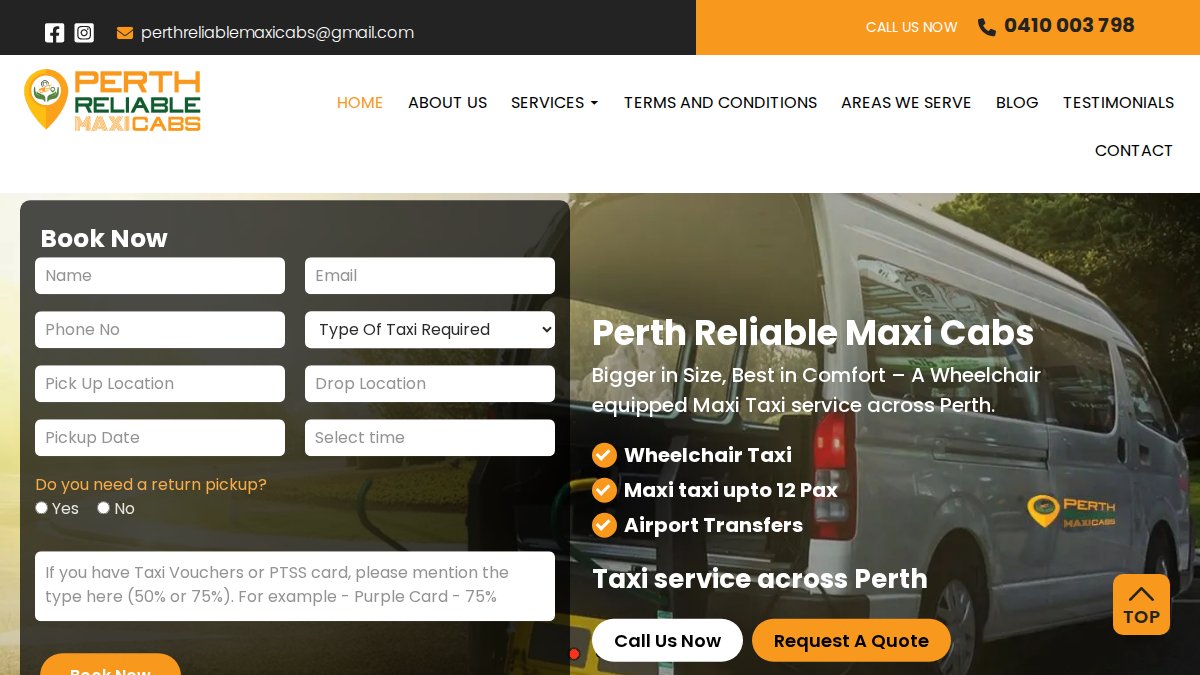
Perth Reliable Maxi Cabs
Pros:
- Specialised focus on mobility needs
- Direct booking by phone or online contact form
- Drivers experienced in assisting elderly passengers
Cons:
- Limited real-time online booking compared with app-based services
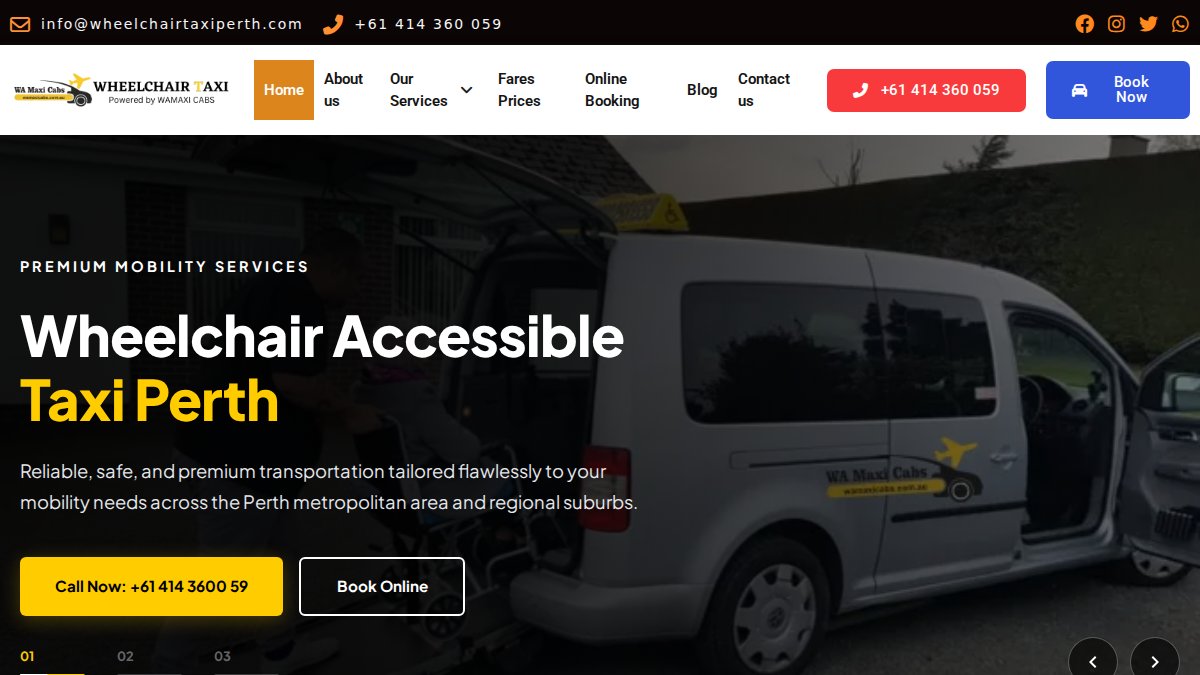
Wheelchair Taxi Perth
Pros:
- Wheelchair-modified vehicles with boarding assistance
- Transparent pricing policy
- Clear accessibility focus
Cons:
- Service area subject to vehicle availability
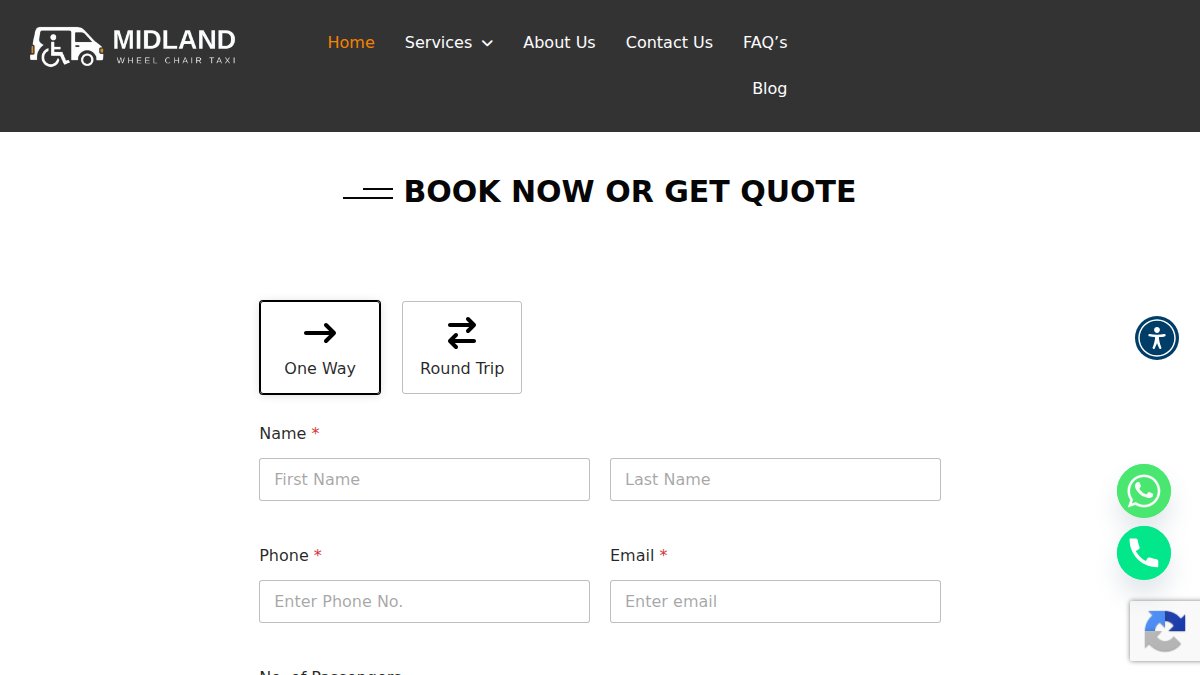
Midland Wheelchair Taxi
Pros:
- Strong local presence in the eastern suburbs
- Tailored to the local community
- Accessible fleet
Cons:
- Geographically limited service area
Wheels for Hope
Pros:
- Highly specialised support for significant mobility restrictions
- Community-oriented model
- Accessible vehicle access for eligible members
Cons:
- Requires an eligibility assessment before use
Emergency vs Non-Emergency Transport: When to Book Which
Accessible taxis are non-emergency transport, built for planned medical appointments, dialysis runs, social outings and airport transfers, not acute medical events. If someone is seriously unwell or injured, call an ambulance (What care do I need?).
Common Mistakes Seniors Make When Booking Wheelchair Taxis
The most frequent error is booking too late. Accessible vehicles are a smaller share of any fleet, so the closer you book to your appointment, the fewer options remain. Booking a day or two ahead almost always beats a same-hour request.
Other recurring mistakes:
- Not confirming the vehicle has a ramp or lift that suits your wheelchair
- Forgetting to mention a carer or companion travelling with you
- Leaving the MPTP card at home and paying full fare
- Assuming every Maxi Cab is wheelchair accessible when it may only be a large vehicle
- Failing to get a booking confirmation reference for follow-up
The single highest-value habit for regular accessible travel is booking one to two days ahead and confirming the vehicle type in writing. It costs nothing and eliminates most of the friction seniors report with accessible taxis.
Conclusion: Choosing the Right Wheelchair Taxi for Your Needs
Reliable accessible transport comes down to matching the right vehicle and operator to how you actually travel: a genuine accessible fleet, transparent rates, and drivers trained to assist without rushing you.
Frequently Asked Questions
Do wheelchair-accessible taxis cost more than standard taxis?
In Western Australia, wheelchair-accessible taxis are metered like standard taxis, so the fare is based on distance and time, not the vehicle type. Some providers may charge a slightly higher flagfall, but the difference is usually small. The Multi-Purpose Taxi Program (MPTP) can significantly reduce your out-of-pocket costs if you are eligible. Always confirm the fare structure when booking, and ask whether the provider applies the MPTP subsidy automatically.
How do I book a wheelchair-accessible taxi in advance for a medical appointment?
Most services let you book by phone or online, and for medical appointments it is best to book at least 24 hours ahead. Provide your pickup address, appointment time, wheelchair dimensions, and whether you need a ramp or hydraulic lift. Confirm the booking the day before. If you use the MPTP, have your card ready. For recurring appointments, ask about regular booking options to save time.
What is the Multi-Purpose Taxi Program WA and who qualifies?
The Multi-Purpose Taxi Program (MPTP) is a Western Australian government scheme that subsidises taxi travel for people with permanent disabilities or severe mobility restrictions. Eligibility is based on a medical assessment, not age alone. If approved, you receive a card that reduces the fare on eligible trips. The subsidy amount and annual cap are set by the WA Department of Transport, so check the official website for current figures. Seniors with mobility needs should ask their GP about applying.
Do drivers receive specific training for assisting seniors with disabilities?
Drivers of wheelchair-accessible taxis in WA must complete training in passenger assistance, including safe wheelchair securement, ramp operation, and communication with people who have mobility or cognitive challenges. This training is required under state transport regulations. When booking, you can ask whether the driver has experience with your specific equipment, such as a larger power chair or a reclining wheelchair. Reputable providers ensure their drivers are up to date with this training.