

Table of Contents
- Why Standard Taxis Fall Short for Wheelchair Users
- Wheelchair Accessible Maxi Taxis and Dedicated Services
- NDIS Transport Funding for Wheelchair Users
- Wheelchair Accessible Vehicle Booking Tips
- Multi-Purpose Taxi Program Eligibility and How It Works
- Self-Drive and Van Hire Options for Independence
- Public Transport and Rideshare Integration
- Comparison Table: Transport Options for Wheelchair Users
Last Updated: August 25, 2026
Why Standard Taxis Fall Short for Wheelchair Users
Standard taxis lack essential modifications, ramps, lifts, secure tie-down systems, and spacious interiors, that make vehicles genuinely accessible. Most drivers haven’t received disability awareness training, leading to uncomfortable interactions, delays, or service refusals. Worse, booking a standard taxi offers no guarantee the vehicle arriving will actually be accessible, forcing wheelchair users to plan weeks in advance and sacrificing spontaneity and independence.
This guide from Universal Cabs explores alternatives that restore both access and autonomy: dedicated wheelchair services, public transport integration, NDIS-funded solutions, and self-drive options.
The real difference isn’t just whether a vehicle has a ramp. It’s whether the entire service, from booking to arrival to driver interaction, was designed with wheelchair users in mind. That’s what separates a workaround from a genuine solution.
Wheelchair Accessible Maxi Taxis and Dedicated Services
A wheelchair accessible maxi taxi is purpose-built with hydraulic ramps or lifts, secure restraint systems, and spacious interiors. These vehicles accommodate wheelchairs in their original position, no transfers required, alongside companion seating.
Dedicated wheelchair taxi services employ drivers trained in disability support and accessibility protocols, ensuring consistent, respectful service. Services like Wheelchair Maxi Perth and Perth Reliable Maxi Cabs specialise entirely in accessible transport, meaning every vehicle, every driver, and every booking process has been optimised for wheelchair users.
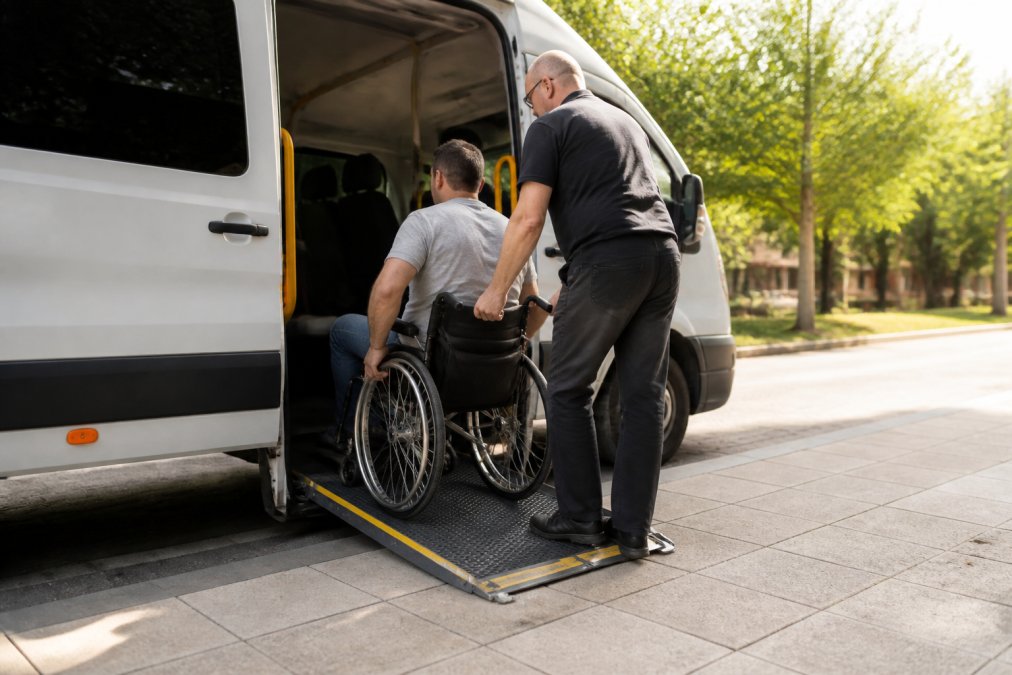
When you book a dedicated accessible taxi service, an accessible vehicle is guaranteed, no surprises or last-minute cancellations. Wheelchair Maxi Perth accepts PTSS (Passenger Transport Subsidy Scheme) cards with up to 75% subsidy per trip, capping costs at $35 (transport.wa.gov.au). Perth Reliable Maxi Cabs offers metered or fixed-price options with no surge pricing during peak hours. Universal Cabs maintains a diverse fleet including wheelchair-accessible maxi taxis with experienced drivers trained in accessibility support and guarantees consistent pricing regardless of time of day.
The main limitation is booking lead time. Many services require 24 to 48 hours’ advance notice to guarantee availability, creating friction for spontaneous trips or emergencies.
Booking too late is the most common mistake. If you need an accessible taxi for a medical appointment, book at least 24 hours ahead. Last-minute bookings may be refused or delayed significantly.
NDIS Transport Funding for Wheelchair Users
The National Disability Insurance Scheme (NDIS) funds transport for eligible participants who cannot use public transport independently due to their disability (ndis.gov.au). This is dedicated funding built into your NDIS plan specifically for transport support.
NDIS-funded transport covers assisted travel, where a support worker accompanies you, and transport services, where a wheelchair-accessible vehicle with a trained driver handles the entire journey. Providers like Hillcrest Health NDIS Assist Travel and YourChoice Disability Services operate as registered NDIS providers throughout Perth with wheelchair-accessible vans and qualified support workers.
The financial advantage is significant: NDIS funding covers the full cost of transport for eligible participants, removing out-of-pocket expenses entirely. Services also include public transport training, helping participants develop independent travel skills over time.
The critical limitation is eligibility. NDIS transport funding is available only to current NDIS participants. Additionally, availability of wheelchair-accessible vans can be limited, requiring significant booking lead time.
If you’re an NDIS participant, transport funding should be one of the first items in your plan. It’s often underutilised, but it’s one of the most practical supports available for maintaining independence and accessing community activities.
Wheelchair Accessible Vehicle Booking Tips
Booking an accessible vehicle successfully requires asking the right questions upfront. First, confirm the vehicle type: does it have a hydraulic lift, a ramp, or both? How many wheelchairs can it accommodate? Will you need to transfer from your wheelchair or can it remain in its original position?
Second, provide detailed information about your mobility aid, including dimensions, weight, and any additional equipment like oxygen tanks or service animals. Third, confirm lead time requirements, some services guarantee same-day bookings; others require 24 to 48 hours. If you need transport urgently, ask whether emergency bookings are possible.
Fourth, clarify accessibility features at your destination. If you’re being picked up from a location with specific access needs, mention it so the service can advise whether additional support is needed. Finally, ask about cancellation policies and what happens if the vehicle doesn’t arrive as scheduled. Reliable services like Universal Cabs guarantee minimal waiting times, but it’s worth confirming the specific service level agreement for your booking.
Multi-Purpose Taxi Program Eligibility and How It Works
The Multi-Purpose Taxi Program (MPTP) is a government-funded scheme providing subsidised transport to eligible people with permanent mobility disabilities that significantly restrict their ability to use public transport or standard taxis (transport.wa.gov.au).
Once approved, participants receive taxi vouchers or a subsidy card that reduces the cost of eligible trips. Instead of paying the full metered fare, you pay a fixed contribution, typically a small amount per trip, and the scheme covers the remainder up to a maximum subsidy limit. MPTP-eligible trips can be taken with any accredited taxi service that accepts the subsidy card or vouchers, providing flexibility.
The main advantage is cost reduction. A trip costing $25-30 could be reduced to $5-8 with MPTP subsidy, making regular transport far more affordable. The limitation is that MPTP doesn’t guarantee accessible vehicles. Combining MPTP eligibility with a dedicated wheelchair taxi service that accepts MPTP vouchers is often the most practical solution.
People with permanent mobility disabilities who need affordable, regular transport and don’t require intensive support. MPTP works best when combined with a service that accepts the subsidy and operates accessible vehicles reliably.
Self-Drive and Van Hire Options for Independence
For wheelchair users who can drive or who travel with a driver companion, self-drive wheelchair-accessible vehicle hire offers maximum independence and flexibility. Able Access Van Hire operates in Perth, offering automatic wheelchair-accessible vans for hire starting at $160 per day, including 100 km of travel. Vans are equipped with wheelchair lifts, can accommodate one or two wheelchairs plus up to eight passengers, and include disabled parking permits, satellite navigation, and reverse cameras.
The independence advantage is substantial. You can make spontaneous trips, adjust your schedule without service constraints, and avoid booking lead times entirely. Drivers must be at least 25 years old and have held a valid driver’s licence for a minimum of two years.
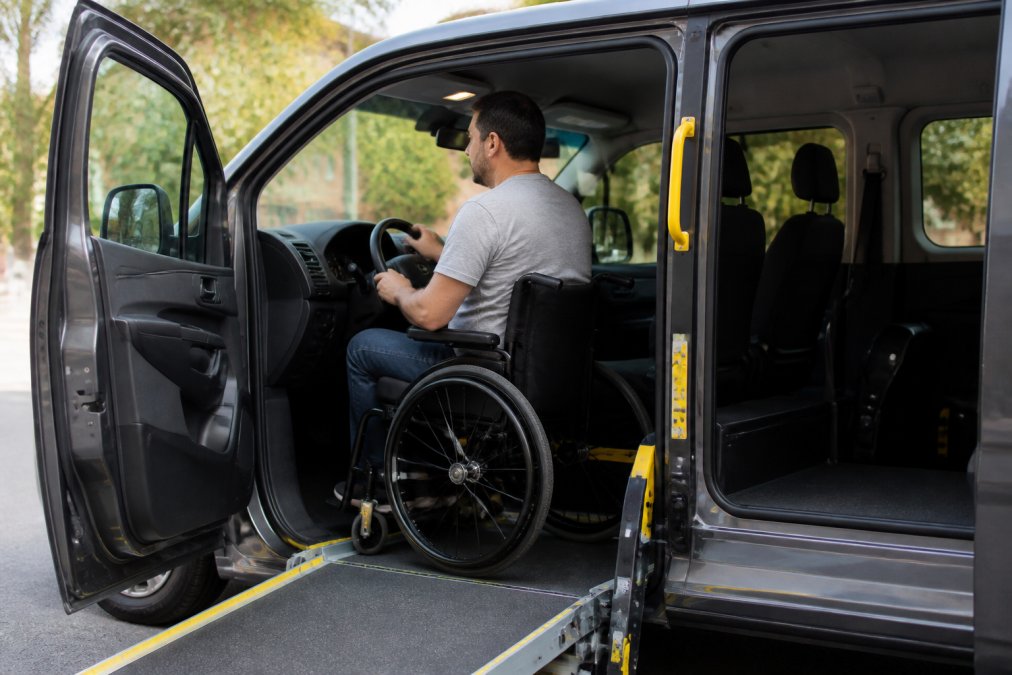
At $160 per day minimum, self-drive van rental is significantly more expensive than subsidised taxi services for single trips. It becomes economical for longer journeys, multi-day trips, or situations requiring transport flexibility that booking services can’t provide. For regular daily commutes, dedicated taxi services remain more cost-effective.
Public Transport and Rideshare Integration
Transperth operates Perth’s public bus, train, and ferry services with substantial accessibility features. All trains are wheelchair-friendly with clearly marked spaces near doors. Perth’s Central Area Transit (CAT) buses are free, frequent, and fully wheelchair accessible throughout the city. Two wheelchair-accessible ferries operate between Barrack Street Jetty and Mends Street Jetty.
The advantage of public transport is cost. CAT buses are free; standard fares are significantly cheaper than taxi alternatives. The limitation is inflexibility. Public transport operates on fixed routes and schedules, and if your destination isn’t on a direct route or you have time-sensitive appointments, you may need to combine services.
Rideshare services like Uber operate in Perth but present accessibility challenges. Standard rideshare vehicles aren’t wheelchair-accessible, and the platform doesn’t clearly indicate which drivers have accessible vehicles. For wheelchair users, rideshare remains a secondary option rather than a primary solution.
The most practical approach combines services: use free or subsidised public transport for routine trips on established routes, book dedicated wheelchair taxi services for time-sensitive journeys, and reserve self-drive hire for situations requiring maximum flexibility.
Comparison Table: Transport Options for Wheelchair Users
| Option | Best For | Cost | Booking Lead Time | Reliability |
|---|---|---|---|---|
| Dedicated Wheelchair Taxi (e.g., Wheelchair Maxi Perth) | Regular trips, medical appointments, time-sensitive journeys | Pricing depends on distance and time; $5-35 with subsidy | 24-48 hours | Highest, guaranteed accessible vehicle |
| Universal Cabs Accessible Service | Daily commutes, airport transfers, corporate travel | Transparent pricing, no surge spikes | Minimal waiting times | High, diverse fleet, flight tracking |
| NDIS Funded Transport | NDIS participants needing assisted travel | Fully funded for eligible participants | Varies by provider | High, registered providers |
| MPTP Subsidy + Taxi | Budget-conscious, regular transport | $5-10 per trip with subsidy | Varies | Medium, depends on chosen service |
| Self-Drive Van Hire | Spontaneous trips, multi-day travel, maximum independence | $160/day minimum | Immediate availability | High, you control schedule |
| Public Transport (Transperth) | Routine trips on established routes, budget priority | Free (CAT); standard fares otherwise | Real-time scheduling | Medium, fixed routes, schedule-dependent |
| Rideshare (Uber) | Backup option, non-urgent trips | Variable surge pricing | Immediate | Low, inconsistent accessibility |
Choosing the right transport option depends on your frequency of trips, budget constraints, advance planning capacity, and independence preferences. For most wheelchair users in Perth, a combination approach works best: public transport for routine trips, dedicated wheelchair taxi services for appointments and events, and self-drive hire for occasional flexibility. Universal Cabs offers reliable wheelchair-accessible options with consistent pricing and minimal waiting times, making it a dependable choice for regular transport needs. Book now and experience transport designed around your accessibility requirements, not as an afterthought.
=== FAQ ANSWERS (audit these too, same rules) ===
[1] Q: Are wheelchair accessible taxis more expensive than standard taxis?
A: Dedicated wheelchair accessible taxi services typically charge metered fares aligned with Department of Transport rates, with no additional surcharge for the wheelchair accessibility feature itself. Services like Wheelchair Maxi Perth accept Passenger Transport Subsidy Scheme (PTSS) cards, which provide up to 75% subsidy per trip. Pricing depends on distance and time, but many providers offer fixed-price options for regular bookings. Contact your preferred provider for exact rates, as they vary by service.
[2] Q: How do I book a wheelchair accessible vehicle in advance?
A: Most wheelchair accessible taxi services accept advance bookings via phone or online booking platforms. When booking, specify your wheelchair type, any mobility aids, and whether you need assistance. Dedicated services like Wheelchair Maxi Perth and Perth Reliable Maxi Cabs offer personalised bookings with guaranteed pick-up. For regular trips (daily, weekly, or fortnightly), arrange recurring bookings to secure consistent availability. Allow adequate lead time, especially for airport transfers or peak times, to ensure vehicle availability.
[3] Q: What is the Multi-Purpose Taxi Program and who is eligible?
A: The Multi-Purpose Taxi Program (MPTP) is a state-based subsidy scheme providing eligible people with disabilities, seniors, and certain health conditions with discounted taxi fares. Eligibility varies by state and typically includes people with permanent mobility restrictions, vision impairment, or those holding a disability support pension. To apply, contact your state’s transport regulator or visit their official website for current eligibility criteria and application procedures. MPTP subsidies generally apply to standard and wheelchair-accessible taxis.
[4] Q: Can I use rideshare services like Uber for wheelchair accessible transport?
A: Uber and other rideshare platforms have limited wheelchair accessible vehicle availability in most regions. Dedicated wheelchair accessible taxi services and maxi cabs offer more reliable accessibility features, including ramps or hydraulic lifts, certified restraints, and driver training in disability support. For consistent wheelchair accessible transport, specialist services like Wheelchair Maxi Perth, Perth Reliable Maxi Cabs, or NDIS-funded providers are more dependable than general rideshare platforms.
Frequently Asked Questions
Are wheelchair accessible taxis more expensive than standard taxis?
Dedicated wheelchair accessible taxi services typically charge metered fares aligned with Department of Transport rates, with no additional surcharge for the wheelchair accessibility feature itself. Services like Wheelchair Maxi Perth accept Passenger Transport Subsidy Scheme (PTSS) cards, which provide up to 75% subsidy per trip. Pricing depends on distance and time, but many providers offer fixed-price options for regular bookings. Contact your preferred provider for exact rates, as they vary by service.
How do I book a wheelchair accessible vehicle in advance?
Most wheelchair accessible taxi services accept advance bookings via phone or online booking platforms. When booking, specify your wheelchair type, any mobility aids, and whether you need assistance. Dedicated services like Wheelchair Maxi Perth and Perth Reliable Maxi Cabs offer personalised bookings with guaranteed pick-up. For regular trips (daily, weekly, or fortnightly), arrange recurring bookings to secure consistent availability. Allow adequate lead time, especially for airport transfers or peak times, to ensure vehicle availability.
What is the Multi-Purpose Taxi Program and who is eligible?
The Multi-Purpose Taxi Program (MPTP) is a state-based subsidy scheme providing eligible people with disabilities, seniors, and certain health conditions with discounted taxi fares. Eligibility varies by state and typically includes people with permanent mobility restrictions, vision impairment, or those holding a disability support pension. To apply, contact your state's transport regulator or visit their official website for current eligibility criteria and application procedures. MPTP subsidies generally apply to standard and wheelchair-accessible taxis.
Can I use rideshare services like Uber for wheelchair accessible transport?
Uber and other rideshare platforms have limited wheelchair accessible vehicle availability in most regions. Dedicated wheelchair accessible taxi services and maxi cabs offer more reliable accessibility features, including ramps or hydraulic lifts, certified restraints, and driver training in disability support. For consistent wheelchair accessible transport, specialist services like Wheelchair Maxi Perth, Perth Reliable Maxi Cabs, or NDIS-funded providers are more dependable than general rideshare platforms.
This article was written using GrandRanker